Blog




High winds in Southern California are a serious threat to residential property. Standard backyard fences often fail during Santa Ana wind events because they are not built for high pressure. Often, when the wind blew fence down in local residential areas, it was due to a lack of structural reinforcement or low-quality materials
Finding the best fence design for high winds requires a balance between privacy and airflow. A strong wind resistant fence design protects your home and saves you money on constant repairs.
This guide covers specific engineering choices and materials that withstand high wind rating areas in Los Angeles and surrounding regions.
The Physics of Wind: Why Airflow Matters
A solid fence acts like a sail. It catches 100% of the wind pressure, which puts extreme stress on the posts. Most structural failures happen because the fence has zero “wind transparency.”
Do you need gaps in the fence for wind? Yes. Small spaces between pickets allow air to pass through, significantly reducing the load on the entire structure. A wind fence design that incorporates these gaps is much less likely to snap or lean over time.
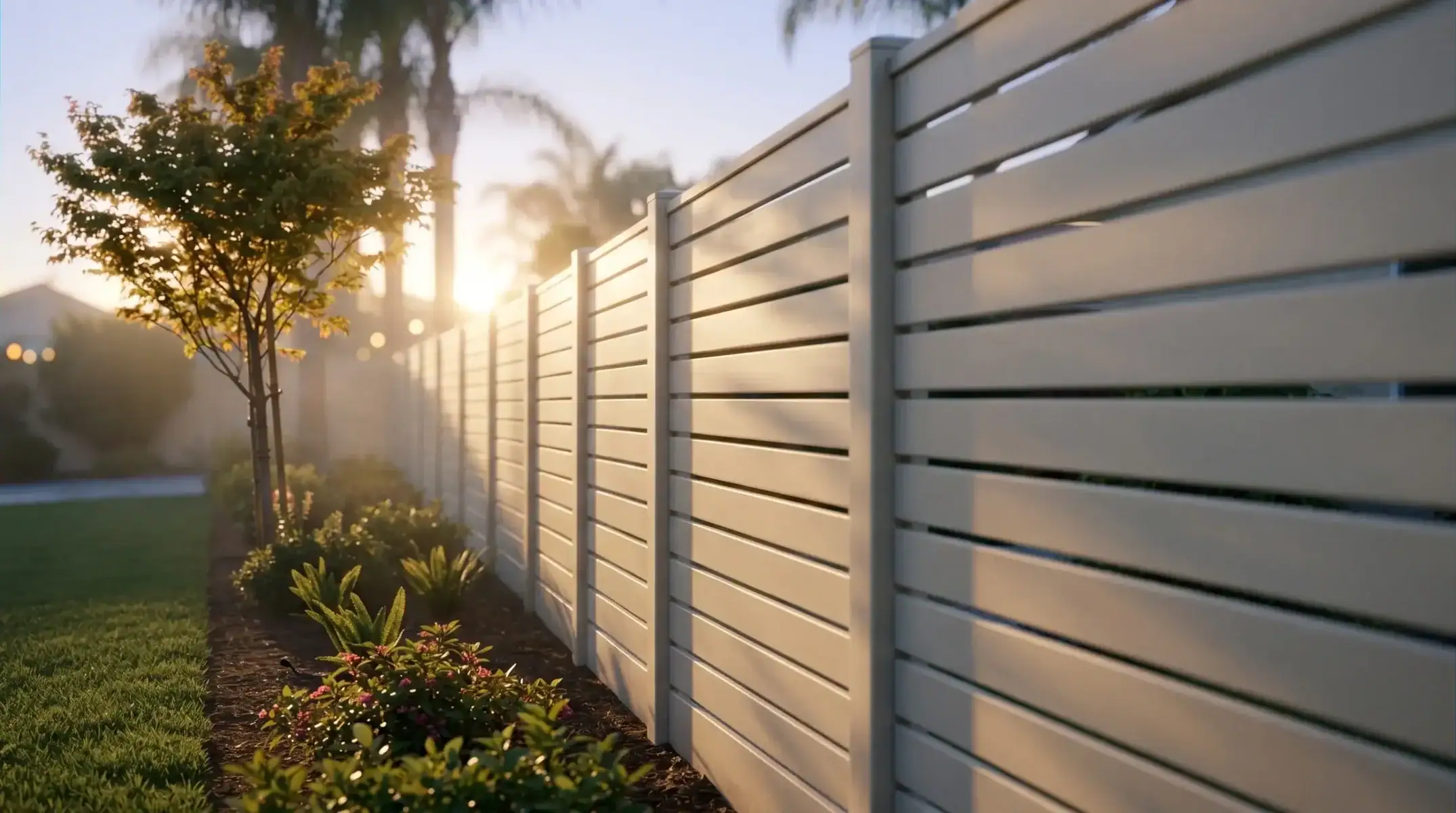
You can still have wind resistant privacy fencing by using specific styles. For example, board-on-board or louvered designs provide a visual barrier while letting air flow through at an angle. This technical approach keeps your yard private without creating a structural liability during a storm.
Material Selection: Durability and Wind Performance
The material you choose is the foundation of a strong wind resistant fence design. While several options exist, they perform very differently under the stress of high-velocity gusts.
| Material | Wind Performance | Long-Term Reliability | Technical Trade-off |
| Aluminum | Excellent | Very High | Natural gaps provide maximum safety |
| Vinyl | High | High | Requires internal steel reinforcements |
| Wood | Low | Moderate | Heavy, catches wind, and decays over time |
| Chain Link | Superior | High | Zero privacy and low aesthetic value |
While wood is a traditional choice, it often fails in high-wind zones. Wood panels are heavy and rigid; they don’t flex, which leads to snapped posts. Chain link offers the best airflow but fails to provide the security and privacy most homeowners require.
For the modern Southern California home, aluminum and reinforced vinyl offer the best performance. Aluminum is naturally a wind resistant fence design because of its picket structure. Vinyl, when engineered correctly, provides the necessary flexibility to withstand pressure without the permanent warping seen in organic materials.
Smart Design Features for Better Aerodynamics
If you are looking for the best fence design for wind, you must consider how the panels are arranged. Certain styles are specifically engineered to break up wind speed.
Louvered Fencing for Privacy
Louvered designs use angled slats. This is the premier choice for wind resistant privacy fencing. It provides a total visual barrier but functions like a shutter, allowing air to pass through the gaps. This design keeps the pressure on your posts to a minimum while keeping your backyard hidden from neighbors.
Horizontal Slats with Precision Spacing
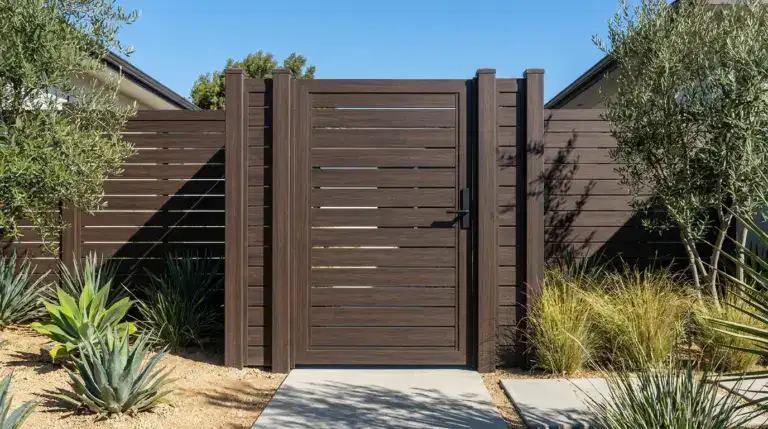
Horizontal fencing is a popular modern aesthetic in Los Angeles. By leaving consistent 1/2-inch to 1-inch gaps between the horizontal boards, you create a sophisticated look that manages wind load effectively. This wind fence design prevents the “wall effect” that destroys solid fences.
Pressure Release Toppers
Adding a decorative lattice or picket topper to a solid fence acts as a pressure release valve. Since wind speeds are often higher a few feet off the ground, an open-style topper allows the strongest gusts to pass through the highest point of the fence. This protects the lower structural components from excessive leverage.
Installation Engineering: The Core of Strength
Even a hurricane proof wind resistant fence design will fail if the foundation is poorly executed. In high wind rating areas, the installation must be more rigorous than standard construction.
- Post Depth: For a standard 6-foot fence, posts should be buried at least 3 feet deep. This provides the necessary leverage to resist the sideways force of the wind.
- Concrete Quality: We use high-strength concrete mixes to ensure the “footing” of the fence remains immovable.
- Internal Reinforcements: For vinyl installations, we utilize heavy-duty internal stiffeners. These steel or aluminum inserts prevent the vinyl from bowing or buckling under pressure.
- Heavy-Duty Hardware: Standard screws and brackets often shear off during storms. Using stainless steel, reinforced hardware ensures the panels stay attached to the posts.
Professional installation is not just about a straight fence line. It is about the hidden engineering that keeps the structure standing when conditions become extreme.
Maintenance and Pre-Storm Inspection
To ensure your strong wind resistant fence design lasts for decades, regular inspections are necessary. High winds can find the smallest weakness in a perimeter.
- Check for Loose Fasteners: Over time, vibration from the wind can loosen screws. Tighten these annually.
- Inspect the Base: Look for cracks in the concrete or soil erosion around the posts.
- Clear Debris: Ensure that heavy objects or tree branches near the fence are secured, as flying debris is a major cause of fence damage.
Professional Fencing Solutions in Southern California
Investing in a wind resistant fence is an investment in your home’s long-term value. Whether you are dealing with the open canyons of Ventura County or the residential streets of Los Angeles, your fence must be built for the local environment.
We specialize in high-performance aluminum and reinforced vinyl fencing tailored for high-wind zones. Our designs provide the privacy you want with the structural integrity you need.
Contact us today for a professional consultation and a free estimate on your wind-resistant project.
- Phone: +1 888-735-8833
- Email: info@calcoast.us
Related Services