Wind Proof Fence Design Guide: Strong Fence Ideas for Windy Areas
High winds in Southern California are a serious threat to residential property. Standard backyard fences often fail during Santa Ana
Wind Proof Fence Design Guide: Strong Fence Ideas for Windy Areas
High winds in Southern California are a serious threat to residential property. Standard backyard fences often fail during Santa Ana

Calcoast Fencing Named “Best of 2026” Fence Contractor in Sylmar California
We are incredibly proud to announce that Calcoast Fencing Company has been awarded the Best of 2026 Award by BusinessRate!
How Does Fencing Work with Neighbors? 5 Must-Know Installation Tips
Thinking about installing a new fence? It’s more than just picking the right wood or vinyl; it’s about navigating the
Why Vinyl & Aluminum are the Best Choice for Pool Fencing
Choosing the right fence for your pool isn’t just about aesthetics. It’s about creating a secure perimeter that looks stunning
Choosing the Perfect Vinyl Fence Style: From Scalloped Pickets to Privacy Panels
Adding a fence to your property is about more than just setting boundaries; it’s about defining your home’s character. As

Our First Achievement Of 2026 – Calcoast Fencing
Calcoast Fencing Company is honored to receive the Best of Houzz 2026 award. Trust Los

California is famous for its sunshine, but homeowners know the wind is a different story. Whether it’s the powerful Santa Ana winds or the steady, salty breezes hitting the coast, your backyard takes a beating.
If you’re considering a new installation, you probably have one big question: How much wind can a vinyl fence withstand?
In this guide, we’ll break down the pvc vinyl fence wind rating, compare durability across different California regions, and show you why a professionally installed vinyl fence is the ultimate choice for a high-wind environment.
When it comes to the weather, flexibility is actually a strength. Unlike wood, which can become brittle and snap, or metal, which can rust, high-quality vinyl is engineered to balance flexibility with rigidity.
But how durable is it in high winds exactly? This is where professional installation and material quality make all the difference. While a basic, quick-install fence might struggle, a properly reinforced and expertly installed vinyl privacy fence wind rating can reach an impressive 110 to 115 mph.
This rating is sufficient for even extreme weather conditions common in California. Understanding vinyl fence wind resistance is the first step toward a worry-free backyard. It’s not just about the plastic; it’s about the engineering behind it.
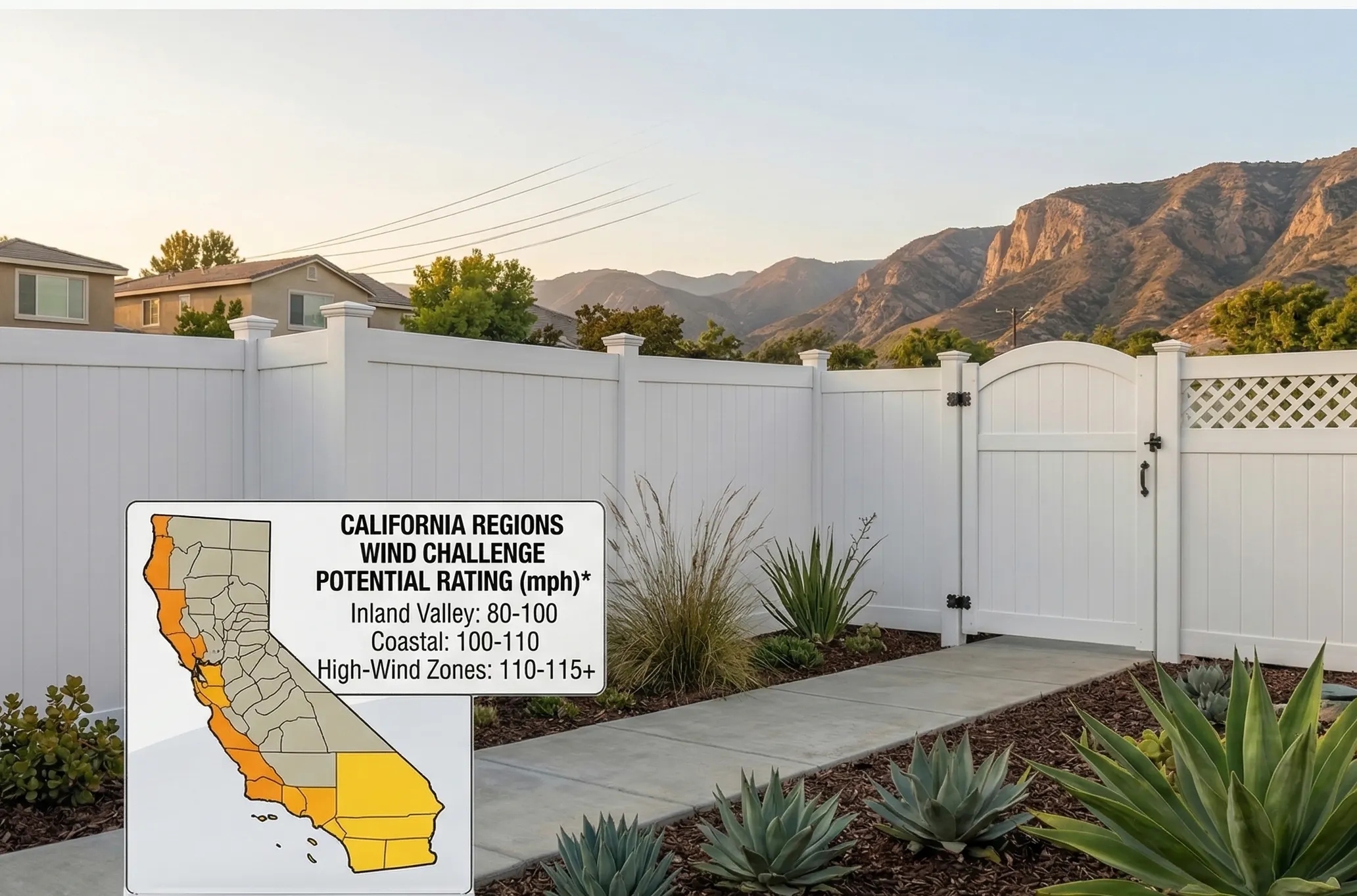
Not all areas in California experience the same wind patterns. A fence that works in a quiet suburban cul-de-sac might not hold up on a coastal bluff. Here is a general vinyl fence wind speed comparison based on common California environments:
California Area Type | Typical Wind Challenge | Recommended Vinyl Configuration | Potential Wind Rating (mph)* |
Inland Valleys (e.g., parts of LA Basin) | Moderate gusts, occasional Santa Anas | Standard professional installation, quality materials | 80 – 100 mph |
Coastal Regions (e.g., Malibu, Santa Monica) | Consistent heavy breezes, salt exposure | Reinforced posts, heavy-duty brackets | 100 – 110 mph |
High-Wind Zones (e.g., Mountain passes, canyons) | Severe Santa Ana gusts, funneling effects | Engineered high-wind systems, internal metal reinforcement | 110 – 115+ mph |
You might think all fences handle wind the same way, but their design plays a huge role in how it holds up in high winds.
The most popular style, a full privacy fence, acts like a giant sail. It catches the wind. This means all that pressure is transferred directly to the posts and the ground. While a well-built vinyl privacy fence wind rating is high, it requires stronger posts and deeper footings.
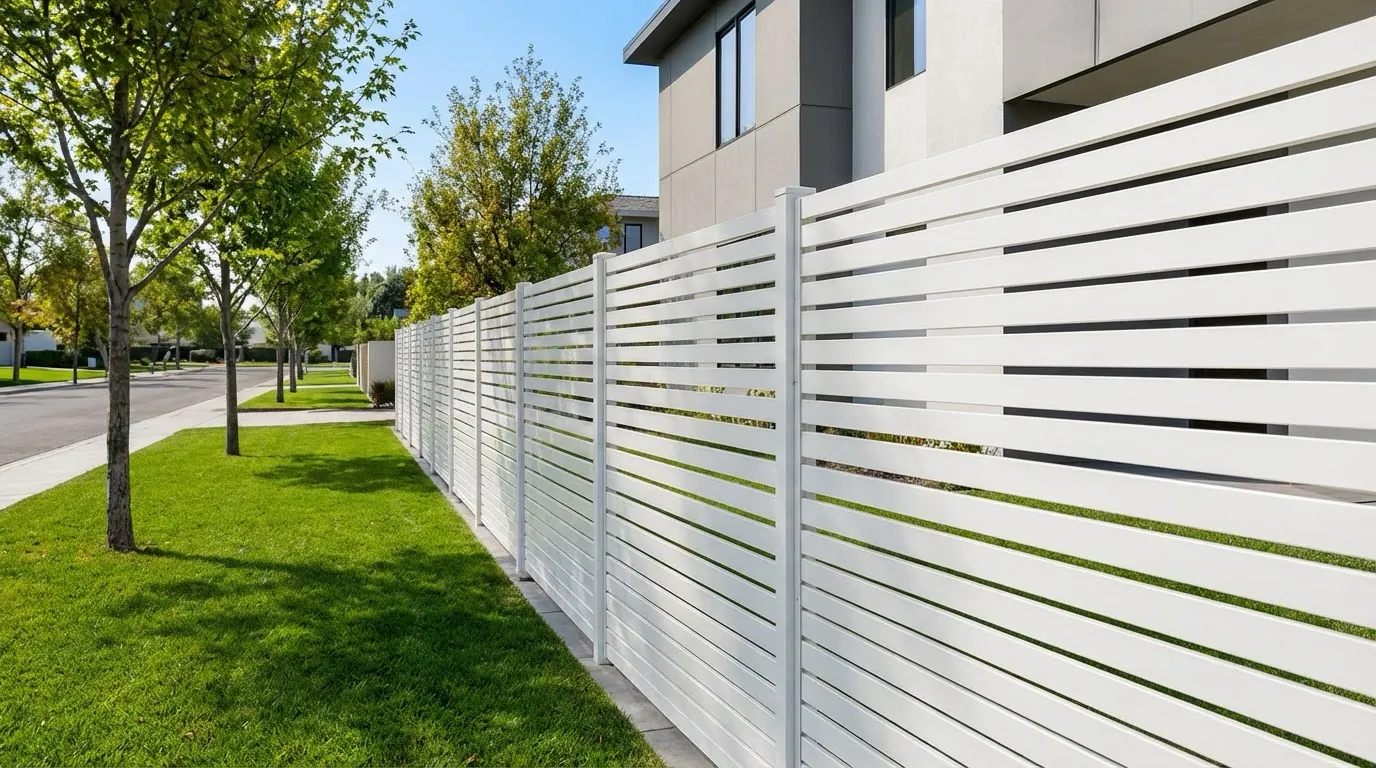
If you are in an exceptionally windy area, you might consider a wind fence design that allows some air to pass through. Styles like lattice-top fences or semi-privacy fences reduce the total wind load. Air gaps allow the wind to blow through the fence rather than just pushing against it. This simple choice can significantly increase the lifespan of your structure.
Even the highest-rated vinyl material will fail if the installation is poor. The posts are the backbone of your fence. For high-wind areas in Los Angeles, we don’t just “dig a hole.” We ensure posts are set deeper, often reinforced with internal aluminum or steel inserts, and secured with the right type and amount of concrete.
Ignoring professional installation techniques is the number one cause of fence failure. If you are currently dealing with a leaning or damaged structure, you know the frustration. Before you start repairing a falling fence, consider that sometimes, an upgrade to a professionally installed vinyl system is the more cost-effective long-term solution.
We hear many questions from California homeowners about how their new fence will handle the elements. Here are the facts.
When installed correctly, vinyl handles strong winds exceptionally well. Its inherent flexibility allows it to bow slightly under pressure without snapping, absorbing the energy of the gust. Compared to wood, which can crack, vinyl’s resilience makes it ideal for areas with frequent strong winds.
A pvc vinyl fence wind rating is a measure of the maximum wind speed the fence system (materials and installation structure) is engineered to withstand without structural failure. When you see a rating of 110-115 mph, it means the system has been tested or engineered to remain standing in those conditions, provided it was installed according to specifications.
Vinyl is generally more durable than wood in high-wind conditions over time. Wood degrades. It rots, suffers termite damage, and becomes brittle. These weaknesses make it susceptible to snapping in high winds. Vinyl retains its strength and flexibility for decades, offering consistent protection.
Choosing a fence in California means balancing style with durability. A vinyl fence offers the perfect mix. It provides the privacy you want and the strength you need. While a quality system can boast a 110-115 mph wind rating, remember that the material is only half the battle.
A sturdy fence starts with expert installation. At Cal Coast, we specialize in building durable, beautiful fences tailored to the unique challenges of the Los Angeles climate. Don’t wait for the next Santa Ana wind event to test your backyard’s defenses.
Ready for a worry-free backyard? Contact Calcoast today for a professional consultation and estimate.