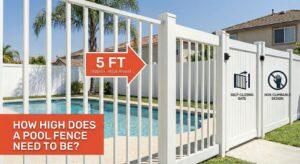
Why Vinyl & Aluminum are the Best Choice for Pool Fencing
Choosing the right fence for your pool isn’t just about aesthetics. It’s about creating a secure perimeter that looks stunning
Why Vinyl & Aluminum are the Best Choice for Pool Fencing
Choosing the right fence for your pool isn’t just about aesthetics. It’s about creating a secure perimeter that looks stunning
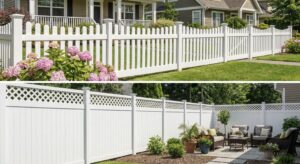
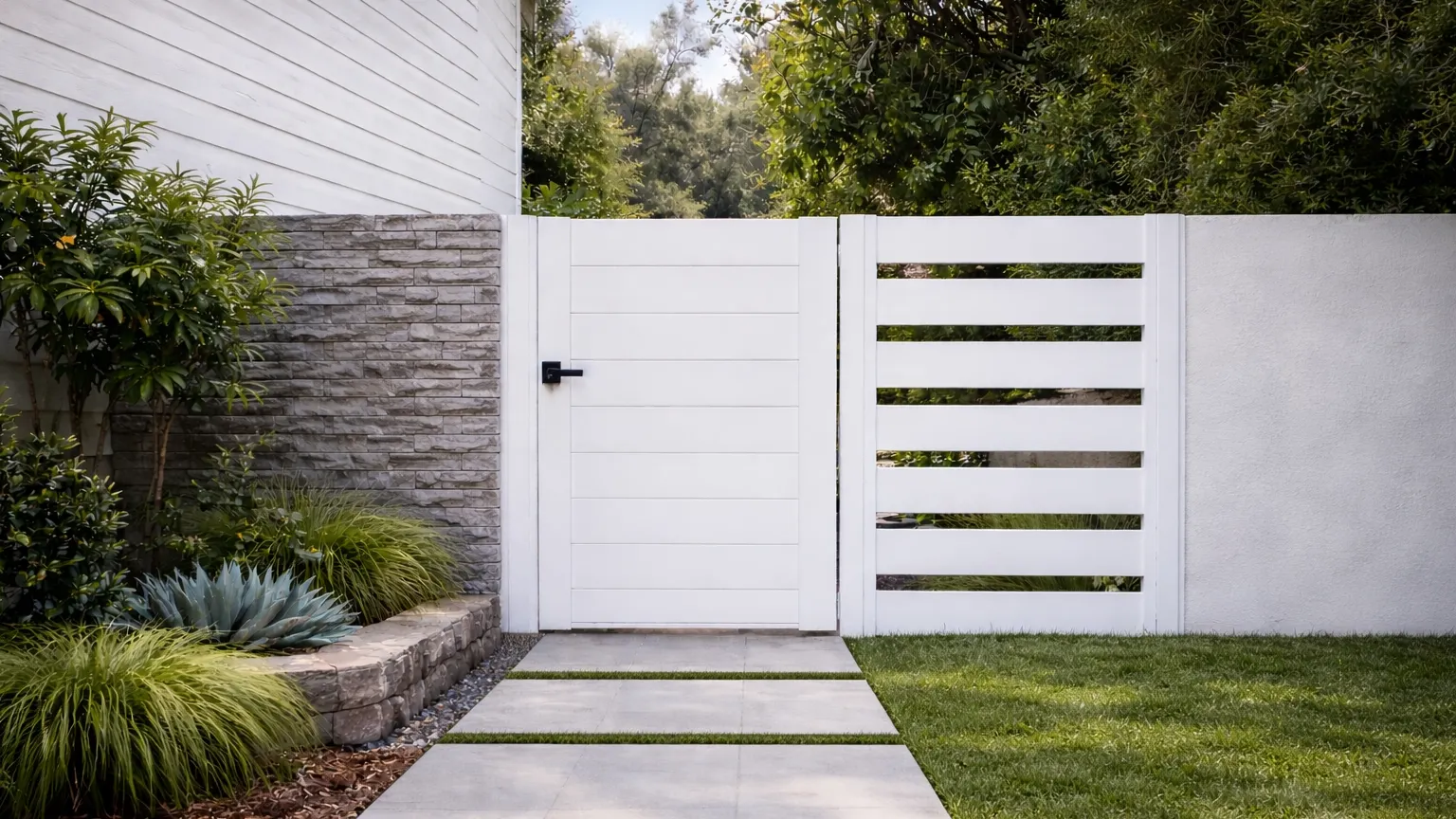
Choosing the Perfect Vinyl Fence Style: From Scalloped Pickets to Privacy Panels
Adding a fence to your property is about more than just setting boundaries; it’s about defining your home’s character. As

Our First Achievement Of 2026 – Calcoast Fencing
Calcoast Fencing Company is honored to receive the Best of Houzz 2026 award. Trust Los
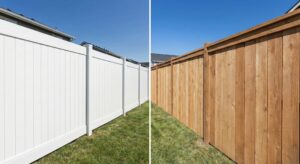
Vinyl vs Wood Fence: Which Is Better for Homeowners?
Choosing the right fence is one of the biggest decisions you’ll make for your home’s exterior. It’s not just about
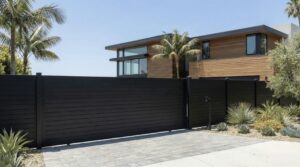
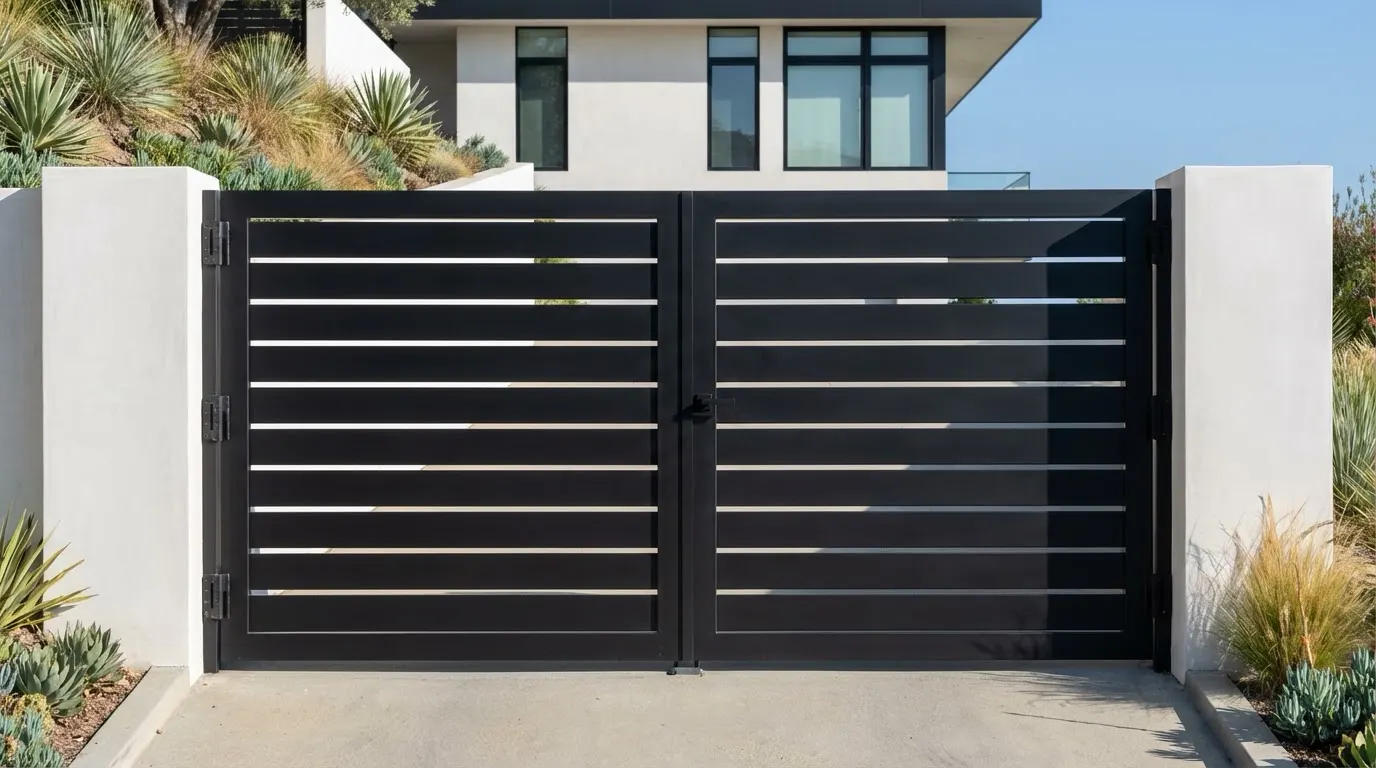
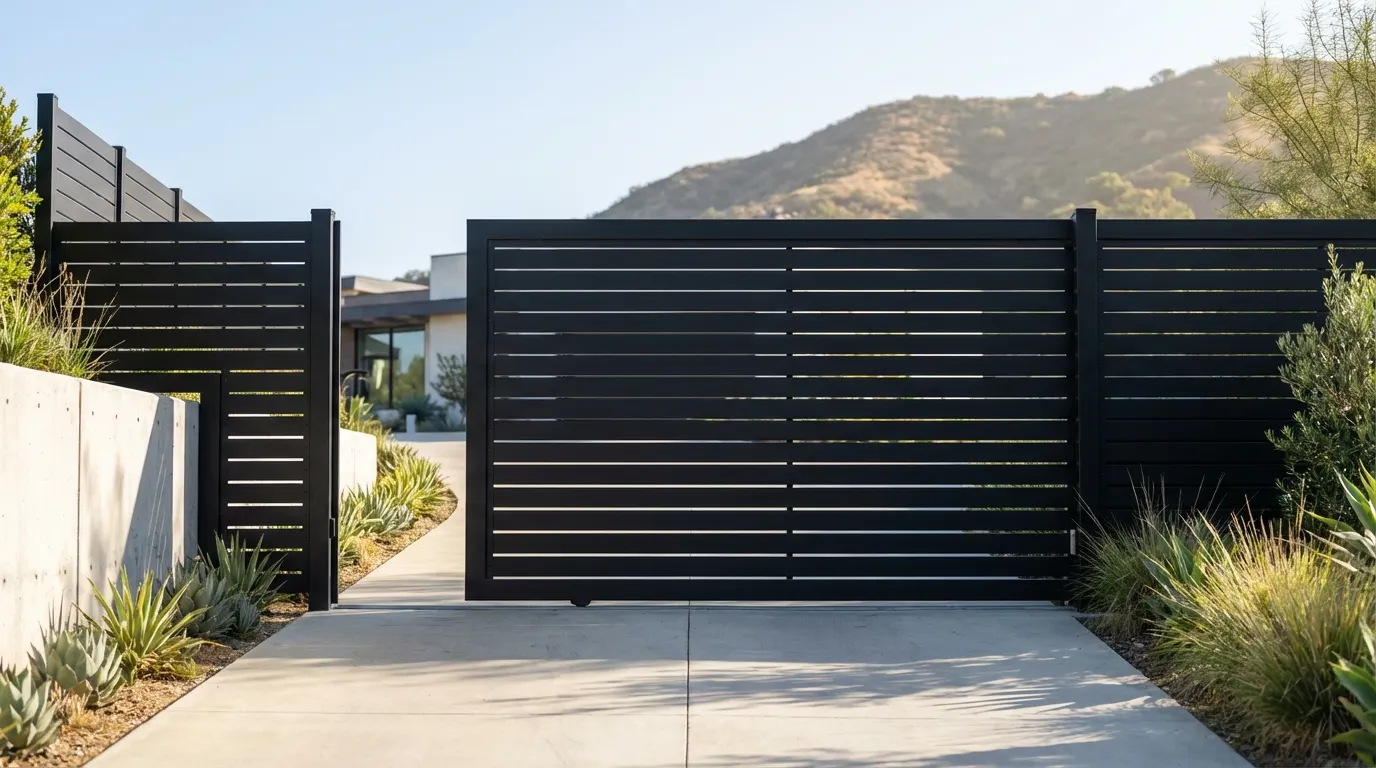
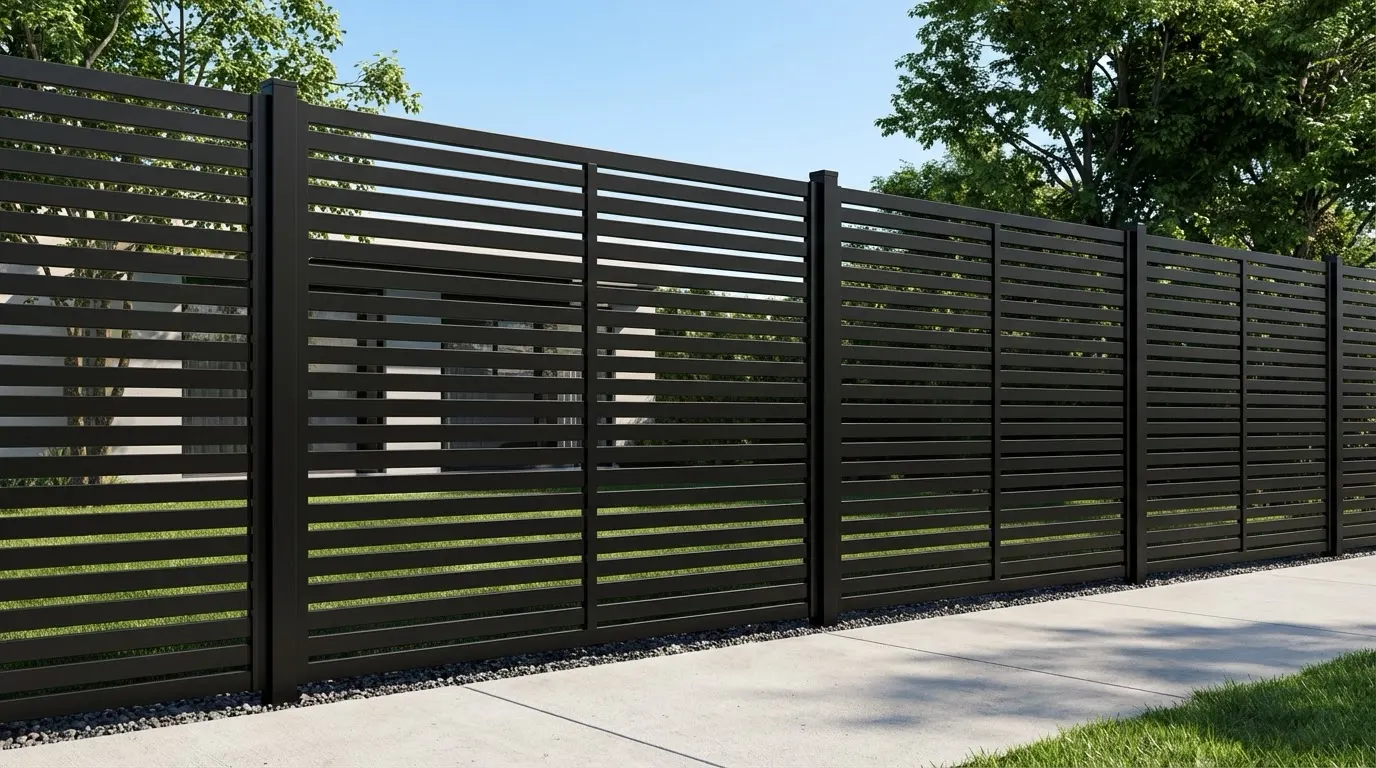
Fencing Trends in Los Angeles: Horizontal Styles and Driveway Gates
Your home’s exterior is the first thing people notice, and in a design-forward city like Los Angeles, a standard fence
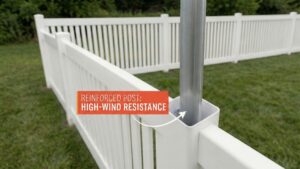
Vinyl Fence Wind Resistance: Everything Homeowners Need to Know
Strong winds are one of the most common concerns homeowners have when choosing a fence. Vinyl fencing is known for

Your fence is one of the first things people notice about your property, and keeping it looking brand new shouldn’t feel like a full-time job.
While many homeowners choose vinyl specifically for its durability, knowing the right way to care for it ensures your investment stays pristine for decades.
In this blog post, we’re going to walk you through the best practices for cleaning and protecting your fence. Whether you’re dealing with dust or just want to perform a routine seasonal check, you’ll find all the answers you need right here.
A high-quality fence is more than just a border; it’s a long-term investment in your home’s appearance and security.
Many people make the mistake of thinking that once a fence is installed, the job is done forever. However, how your fence looks 5 or 10 years from now depends heavily on how you care for it today. Regular maintenance isn’t just about aesthetics. It’s about structural integrity. By spending just a little time each year on basic care, you prevent minor issues from turning into costly repairs.
Think of your fence as part of your home’s “armor.” It stands against the sun, wind, and rain 24/7. Even the toughest materials can be affected by the environment over time if neglected. Proper maintenance ensures that the “health” of your fence remains intact, preserving the value of your property.
One of the most frequent mistakes homeowners make is choosing a “cheap” fencing option based solely on the initial price tag. While it might look great for the first few months, low-quality materials often require constant maintenance just to keep them from falling apart or discoloring.
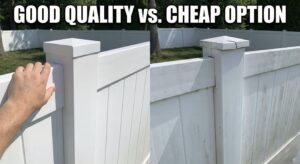
Another major mistake is ignoring the need for simple inspections. Even a non maintenance fence like vinyl can face challenges from outside forces like shifting soil, heavy windstorms, or improper water drainage near the posts.
We recommend doing a brief “inspection walk” at least once or twice a year. During this time, look for things like loose caps, gates that don’t latch perfectly due to ground settling, or excessive dirt buildup near the base where sprinklers might hit.
The beauty of high-quality vinyl is that it is engineered to be extremely durable. Unlike wood, premium vinyl doesn’t rot, warp, or become a snack for termites. It is naturally scratch-resistant and doesn’t splinter, making it safe for families with pets and children.
Most importantly, high-quality vinyl is built with UV inhibitors and weather-resistant technology, which significantly simplifies your pvc fence maintenance routine. This means that even under the intense California sun, your fence won’t lose its color or become brittle and crack. It stays flexible enough to handle the wind while remaining strong enough to maintain its shape
Of course, a low-maintenance vinyl fence depends on a professional installation. A reliable partner ensures that the posts are set with precision and the structural layout is correct from day one. When you combine a high-end product with an expert install, the fence essentially takes care of itself. You get a clean, polished look that stands the test of time without the need for sanding, staining, or expensive yearly treatments.
Keeping your vinyl fence in top shape doesn’t require a professional cleaning crew or expensive equipment. In fact, some of the most effective ways to preserve your investment cost next to nothing. Here are a few budget-friendly vinyl fence maintenance tips for you:
The Seasonal Walkthrough: Once or twice a year, take five minutes to walk the perimeter of your fence. Check that the posts are still firm and the gates swing freely. Catching a small issue, like a loose hinge or a settling post, is much cheaper than waiting for it to become a major repair.
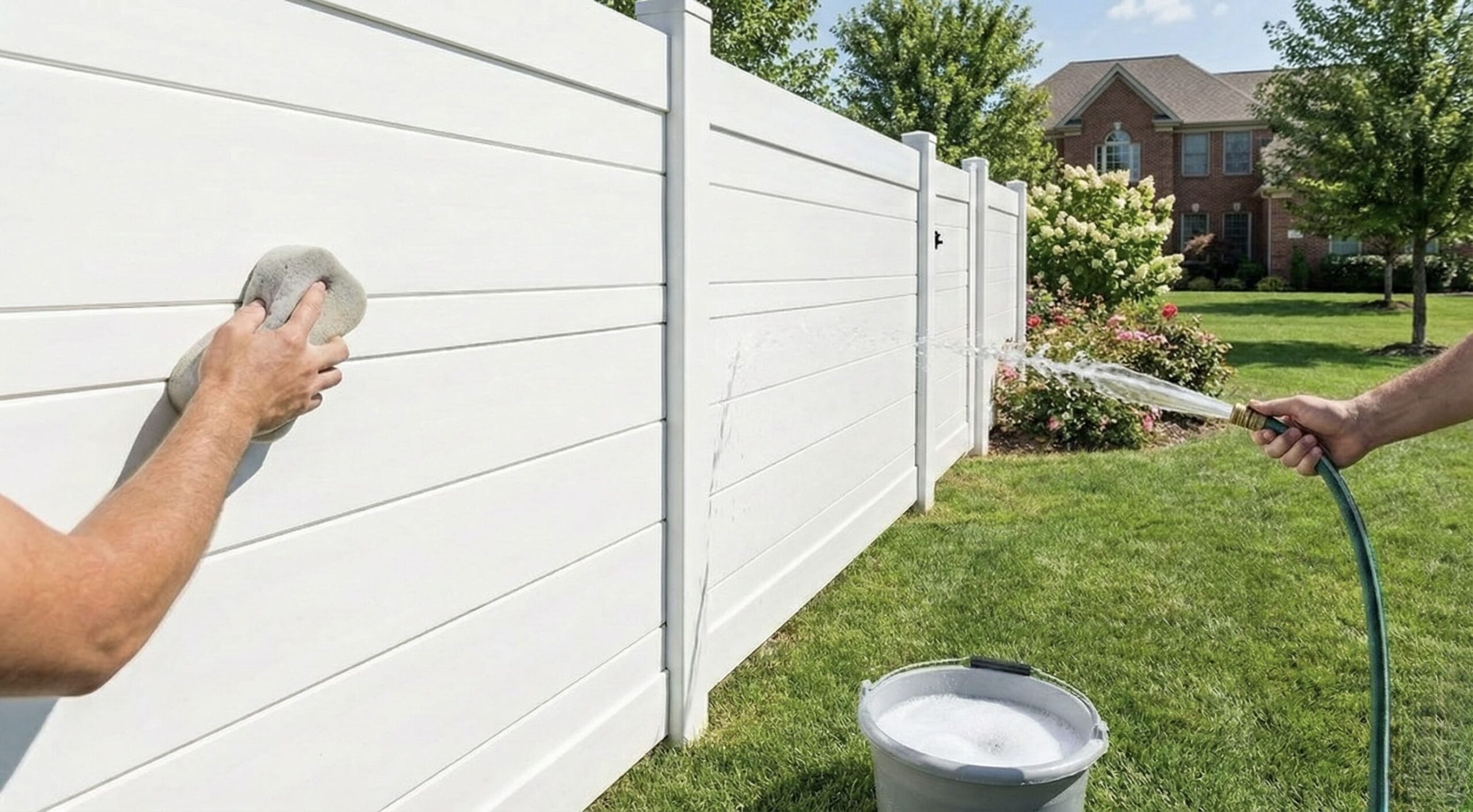
The “Soap and Water” Standard: You don’t need specialized chemical cleaners. A bucket of warm water mixed with mild dish soap is usually all you need to lift away dust, pollen, and dirt. Use a soft cloth or a non-abrasive sponge to avoid scratching the finish.
Routine Rinsing: A quick refresh with your garden hose every few months is an essential part of a smart fence maintenance schedule, as it prevents dirt from caking onto the surface. This is the simplest and most effective way to maintain that ‘just installed’ glow year-round without spending a dime.
Monitor the Ground and Drainage: Keep an eye on the area directly beneath and around your fence. Soil can settle over time, and poor water drainage can cause pooling around the posts, which might lead to shifting. Ensuring that water flows away from your fence line and that the ground remains stable will preserve the “health” of your installation and prevent leaning in the future.
How to keep a vinyl fence clean?
The easiest way is to spray it down with a garden hose every few months to prevent dirt buildup. For tougher spots, warm water mixed with mild dish soap and a soft cloth will be enough.
What is the lifespan of a vinyl fence?
A high-quality vinyl fence typically lasts anywhere from 20 to 30 years or more. Unlike wood, it doesn’t rot or become brittle, maintaining its look and structure for decades with minimal care.
Can I clean my vinyl fence with a pressure washer?
While you can use a pressure washer, it’s usually not necessary and should be done on a low-pressure setting to avoid any damage. A standard garden hose combined with a soft sponge is much safer and generally all you need.
How can vinyl fencing be protected from insect and rodent damage?
One of the biggest advantages of vinyl is that it is naturally insect and rodent-proof because it is a non-porous, synthetic material. Since it doesn’t rot or soften like wood, pests have no way to burrow into or feed on it.