Blog

Protecting your home in Southern California is no longer just about curb appeal. As fire seasons become longer and more intense, local authorities are tightening regulations to save properties.
Homeowners must now prioritize fire resistant fencing and strategic landscaping to create a survival buffer. According to the latest LA fire codes, managing the vegetation and structures around your home is a critical legal and safety requirement.
Your perimeter is your first line of defense. Ignoring these updates can lead to failed inspections or, worse, preventable damage during an ember storm. It is time to move beyond traditional wood and explore materials that won’t fuel a wildfire.
Understanding how to manage your property can feel overwhelming, but staying informed is the best way to gain peace of mind. Ready to secure your home and meet the new standards? Read our new blog post on mastering Zone 1 and choosing the right fire smart landscaping solutions.
Why You Need Fire Safe Fencing in Los Angeles & Across Los Angeles
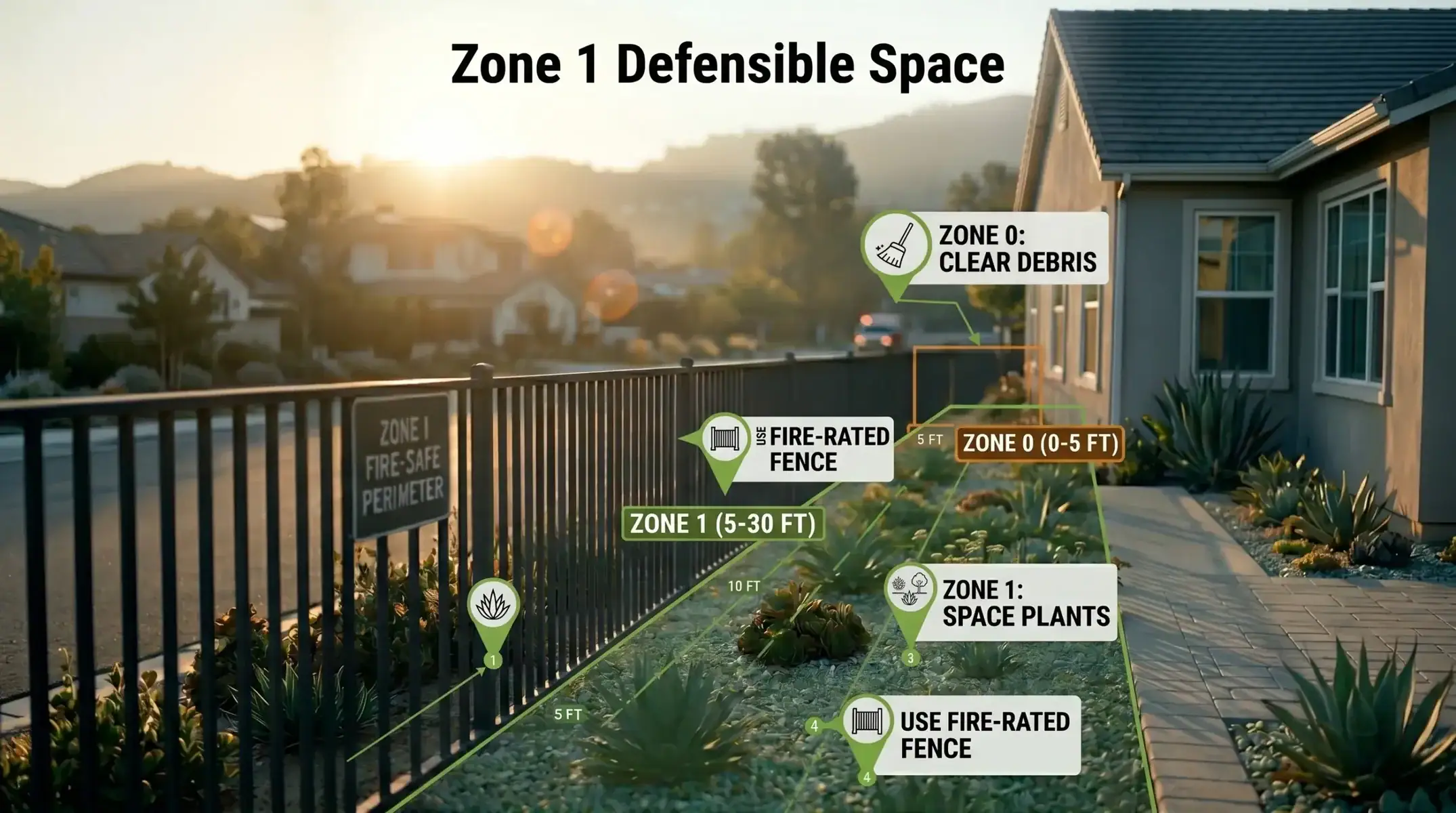
California’s approach to wildfire safety is built on the concept of defensible space. This strategy divides your property into specific rings, or California fire zones, each with its own set of rules. The most critical area is Zone 0, which covers the first 5 feet from your home. This “ember-resistant” zone must be cleared of all combustible materials. However, your defense doesn’t stop there.
Zone 1, extending from 5 to 30 feet from your structures, is where you create the “Lean, Clean, and Green” break. In this area, the goal is to eliminate “fire bridges” – paths that allow flames to jump from the grass to your house. A traditional wooden front yard fence can act as a fuse, leading fire directly to your doorstep. By upgrading to non-combustible materials, you break that chain. Strategic tree spacing for fire safety combined with the right perimeter materials ensures that heat and flames lose momentum before they reach your home.
Top Materials for Fire Resistant Fencing
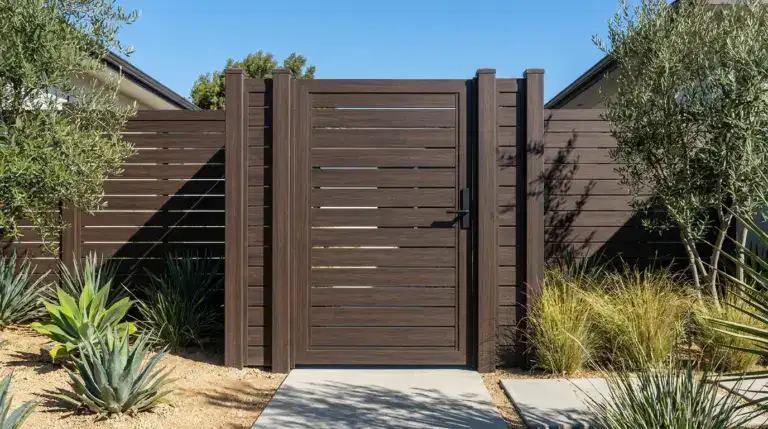
When it comes to the best protection, metal is the clear winner. Aluminum fencing in Los Angeles has become the go-to solution for safety-conscious homeowners. Aluminum does not ignite, and it retains its structural integrity even when exposed to high heat. It is a permanent, stylish, and highly effective barrier for Zone 1.
For many CA properties, 4 ft panel fence options are the ideal choice. A 4-foot height is particularly effective because it provides a clear line of sight for emergency responders while maintaining a low fuel profile. These panels don’t trap heat or collect wind-blown embers as easily as taller, solid structures. If you need more seclusion, an aluminum privacy wall can offer security without the fire risk associated with timber.
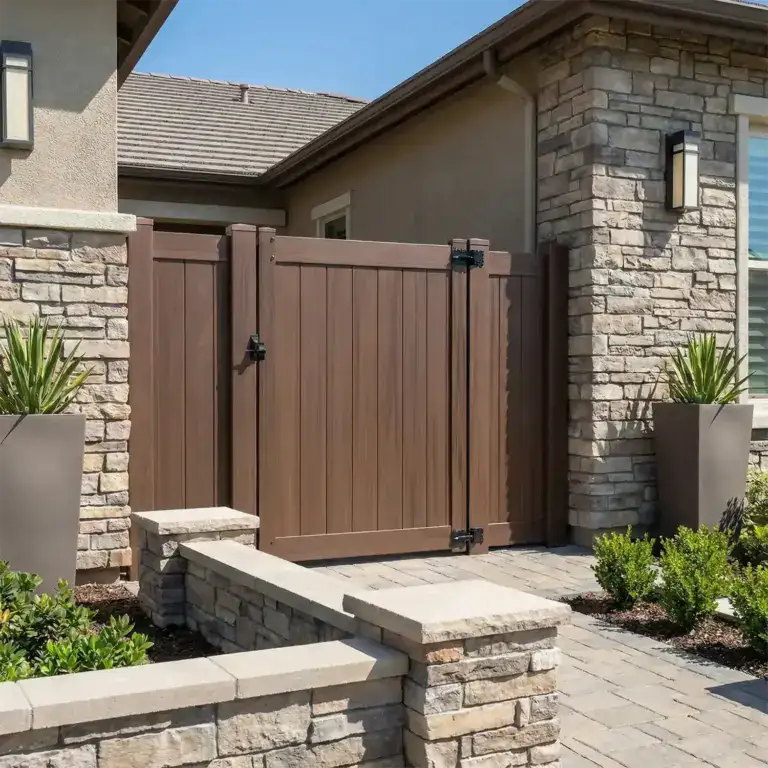
While metal is the gold standard, high-quality vinyl offers another versatile alternative for Zone 1. A semi private pvc fence can be an excellent choice for homeowners who want to balance safety with seclusion. Unlike traditional wood, which provides a continuous path for fire, professional-grade vinyl is engineered to be self-extinguishing and will not ignite from flying embers.
Preparing for a Cal Fire Defensible Space Inspection
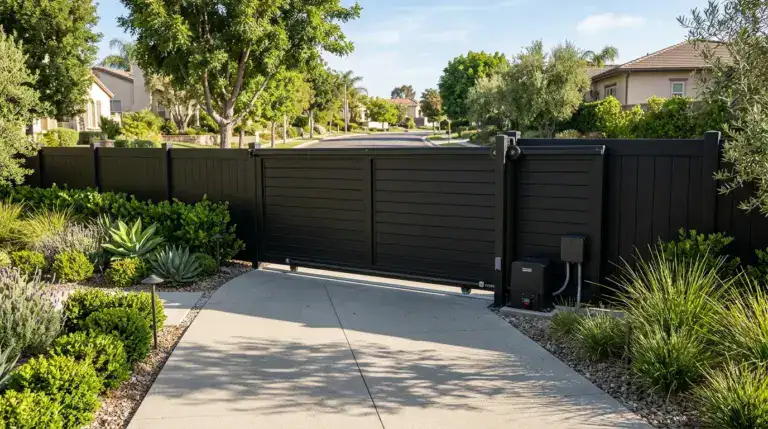
An inspection can be stressful, but it is a vital step in community safety. To pass, you must demonstrate that you have followed the Cal fire guidelines for vegetation and fuel management. This means clearing dead leaves, spacing out shrubs, and ensuring your gates operate smoothly for emergency access.
To help you prepare, we have put together this essential checklist for Zone 1:
| Task | Action Required | Safety Benefit |
| Vegetation Spacing | Maintain 10ft between tree crowns. | Prevents “crown fires” from spreading. |
| Material Check | Remove wooden fences touching the house. | Breaks the fuel path to the structure. |
| Plant Selection | Use fire resistant plants zone 1 (e.g., succulents). | Reduces the intensity of local heat. |
| Debris Removal | Clear needles from the base of the fence. | Prevents ground fires from igniting the barrier. |
| Ground Cover | Use gravel or rock near the fence line. | Creates a non-combustible ground buffer. |
Preparing for an inspector isn’t just about avoiding fines. It’s about ensuring that if a fire does approach, your home is “lean and clean” enough for firefighters to take a stand.
***
Building a fire-safe home requires more than just picking a design. It demands a partner who understands California’s evolving safety codes. At Calcoast Fencing, we do more than just install panels. We help you navigate complex regulations to ensure your investment provides genuine security.
We specialize in high-performance solutions that Los Angeles homeowners trust for both style and safety. Let’s work together to make a smart, fire-safe decision for your property’s future.
Phone: +1 888-735-8833
Email: info@calcoast.us