


Privacy Fences vs. Semi-Privacy: Which Is Right for Your California Backyard?
In California, our backyards are seamless extensions of our living spaces, but they rarely feel that way if you are
Privacy Fences vs. Semi-Privacy: Which Is Right for Your California Backyard?
In California, our backyards are seamless extensions of our living spaces, but they rarely feel that way if you are

Pool Fencing Guide: How to Keep Your Backyard Safe, Stylish, and Up to Code This Summer
Summer is finally here, and backyard pool parties are officially back. There is nothing better than sunny days, cold drinks,

How to Choose a Reliable Fence Contractor in California: The CSLB Standard
A new fence instantly boosts your home’s curb appeal, value, and privacy. However, finding the right team to build
Mastering Zone 1 Defensible Space: Fire-Safe Fencing for CA Homes
Protecting your home in Southern California is no longer just about curb appeal. As fire seasons become longer and more
When Is the Best Time of Year to Install a Fence in Los Angeles?
Los Angeles is famous for its endless summer. While the rest of the country is shoveling snow, we are usually
The California Homeowner’s Guide to Defensible Space & Fire-Safe Fencing for Zone 0 (2026 Update)
The Rising Stakes of California Wildfires For a long time, Southern California homeowners thought of wildfires as a “faraway” problem.

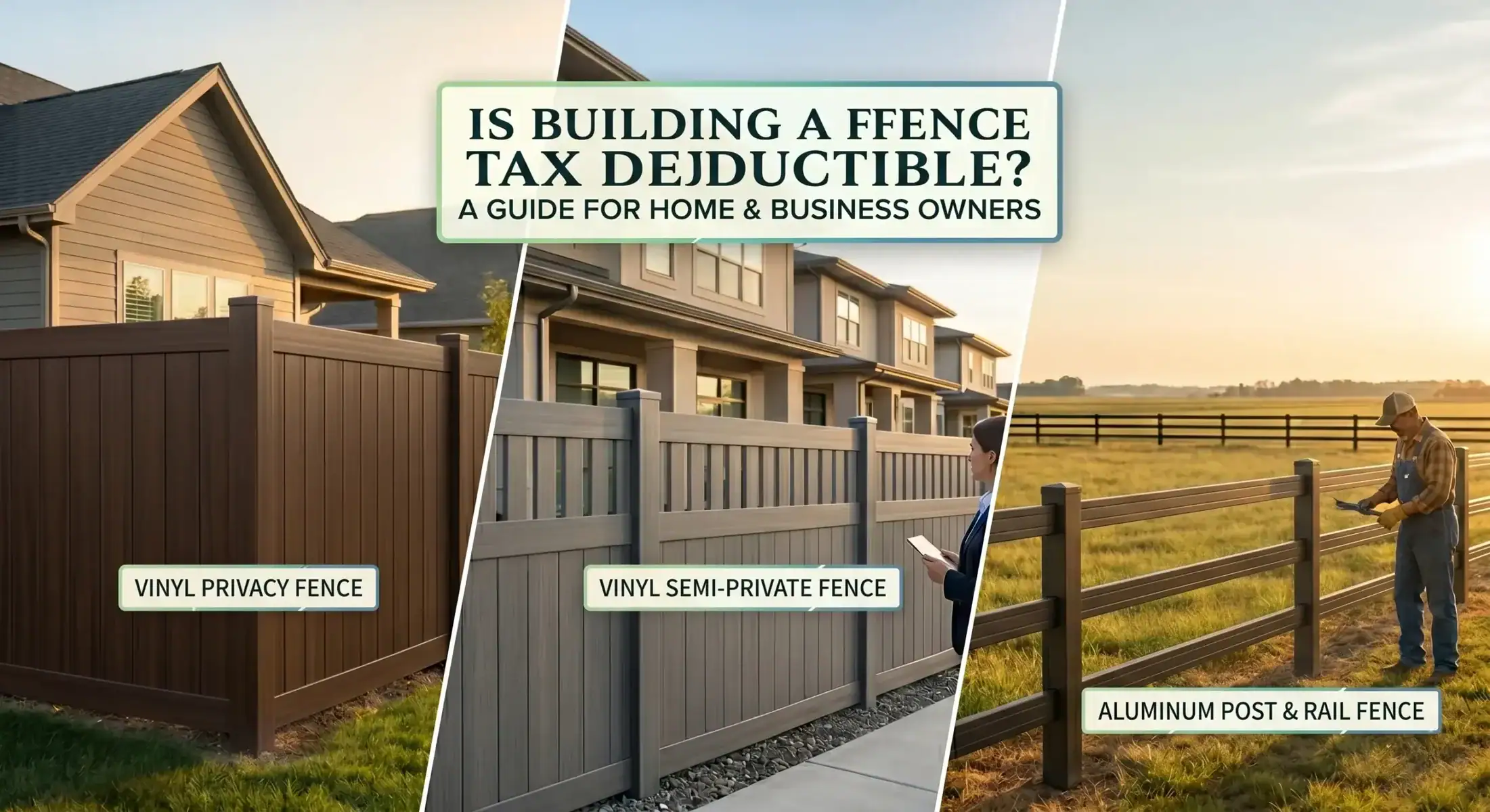
Installing a new fence is a major move. It adds privacy, security, and curb appeal to your property. But once the dust settles, most owners want to know one thing: Can I write this off?
The tax rules around fencing aren’t always straightforward. Depending on whether you own a home, a rental property, or a farm, a fence can be seen as a capital improvement, a business expense, or a non-deductible personal cost.
In this guide, we’ll break down exactly how the IRS treats fence installations. From property tax impacts to depreciation schedules, here is everything you need to know about your new fence and your taxes.
It’s the classic homeowner’s dilemma: you want to increase your home’s value, but you don’t want a massive tax bill to follow. Generally, the IRS and local assessors view a new fence as a permanent improvement. This means it adds to your property’s market value, which could lead to a higher tax assessment. However, when you consider the overall fence installation cost, the long-term equity you build usually outweighs the minor bump in annual taxes.
The increase is usually modest and depends entirely on your local tax rate and the type of material used. A high-end ornamental iron gate will add more value than a simple chain-link barrier. In most cases, you’ll only see a significant change if the fence is part of a larger landscaping overhaul that drastically changes the property’s appraisal.
The short answer is: it depends on how you use the property. The IRS distinguishes between personal use, business use, and rental income properties. While you usually can’t deduct the cost of a fence on your personal home the same way you’d deduct a business expense, it still offers significant tax advantages by shifting the financial math of your home’s value.
For most homeowners, a fence is not a direct tax deduction. However, it is classified as a capital improvement. This is a key distinction because capital improvements add to your property’s value, prolong its life, or adapt it to new uses.
Instead of an immediate write-off, the cost of the fence is added to your home’s cost basis. Understanding the adjusted tax basis rules is crucial here. When you eventually sell your home, a higher cost basis reduces the taxable gain on the sale. Essentially, the money you spend on the fence today can lower the capital gains tax you might owe in the future, keeping more profit in your account.
If you own a rental property, the rules change in your favor. Unlike a primary residence, a fence for a rental is considered a business expense. However, you don’t deduct the full cost all at once. Instead, you recover the cost over time through depreciation. This falls under the residential rental property deductions guidelines, which allow you to offset your rental income with the cost of improvements.
For commercial properties and rentals, the IRS uses the Modified Accelerated Cost Recovery System to determine how long it takes to write off the asset. According to MACRS depreciation guidelines, a fence is generally classified as a 15-year land improvement. This means you can distribute the cost of the fence over a 15-year period, providing a consistent tax shield that lowers your annual taxable rental income.
For those in the agricultural sector, fencing is more than just a boundary; it’s a vital piece of business equipment. Whether you are protecting crops or containing livestock, the IRS views these installations as essential to your operations. These costs are typically fully deductible as agricultural business expenses, provided the fence is used exclusively for the farm’s production activities.
Some farm owners may even be eligible to deduct the entire cost of the fence in the very first year, rather than depreciating it over 15 years. That can provide significant cash flow relief for expanding operations.
One of the most common points of confusion for property owners is the difference between a repair and an improvement. The IRS has very different rules for each. Generally, a repair is something that keeps your property in good condition but doesn’t necessarily add to its value or prolong its life. Think of replacing a few broken slats or repainting a weathered section. For a primary residence, these minor fixes are considered personal expenses and are not tax-deductible.
However, if you decide to replace the entire structure, it moves into the category of a capital improvement. This is where choosing high-quality, durable materials pays off. For example, homeowners in storm-prone areas often upgrade to wind-resistant vinyl fences to ensure longevity. While the upfront cost is higher, the IRS views this total replacement as an investment that increases your property’s basis. If you own a rental or business property, repairs can often be deducted in the year they occur, while a full replacement must be depreciated over time.
Yes, but primarily for business or rental properties. The IRS views a fence as a land improvement, allowing you to recover the cost over several years through depreciation.
Under the standard MACRS system, commercial and rental fences are typically depreciated over a 15-year period. This allows for a consistent annual tax break throughout the life of the asset.
Generally, no. You cannot deduct the cost as a current-year expense on your personal home, but it does increase your “tax basis.” This can eventually lower the taxes you pay when you decide to sell the property.
You might be able to claim a portion of it. If the fence is necessary for your business operations or secures a dedicated home office area, you may qualify for a partial deduction based on the percentage of your home used for work.
High-quality, durable materials like premium vinyl and aluminum offer the best ROI. These structures add “curb appeal” and security, which are key factors when an appraiser determines your property’s market worth.
In rare cases, yes. If a doctor confirms the fence is a medical necessity, such as preventing a child with a specific condition from wandering, it may qualify as a deductible medical improvement.
***
A high-quality fence is a strategic investment that delivers value far beyond aesthetics. Whether you’re looking to lower future capital gains or maximize depreciation, the right installation makes all the difference.
If you’re unsure how these tax rules apply to your specific project, we’re here to help. Our team can provide guidance on the best fencing solutions for your needs and help you understand the long-term value of your investment. For final tax filings, we always recommend a quick chat with your CPA to ensure you’re maximizing every possible benefit.
Ready to upgrade? Contact us today for a professional estimate and expert advice tailored to your property.
Phone: +1 888-735-8833
Email: info@calcoast.us