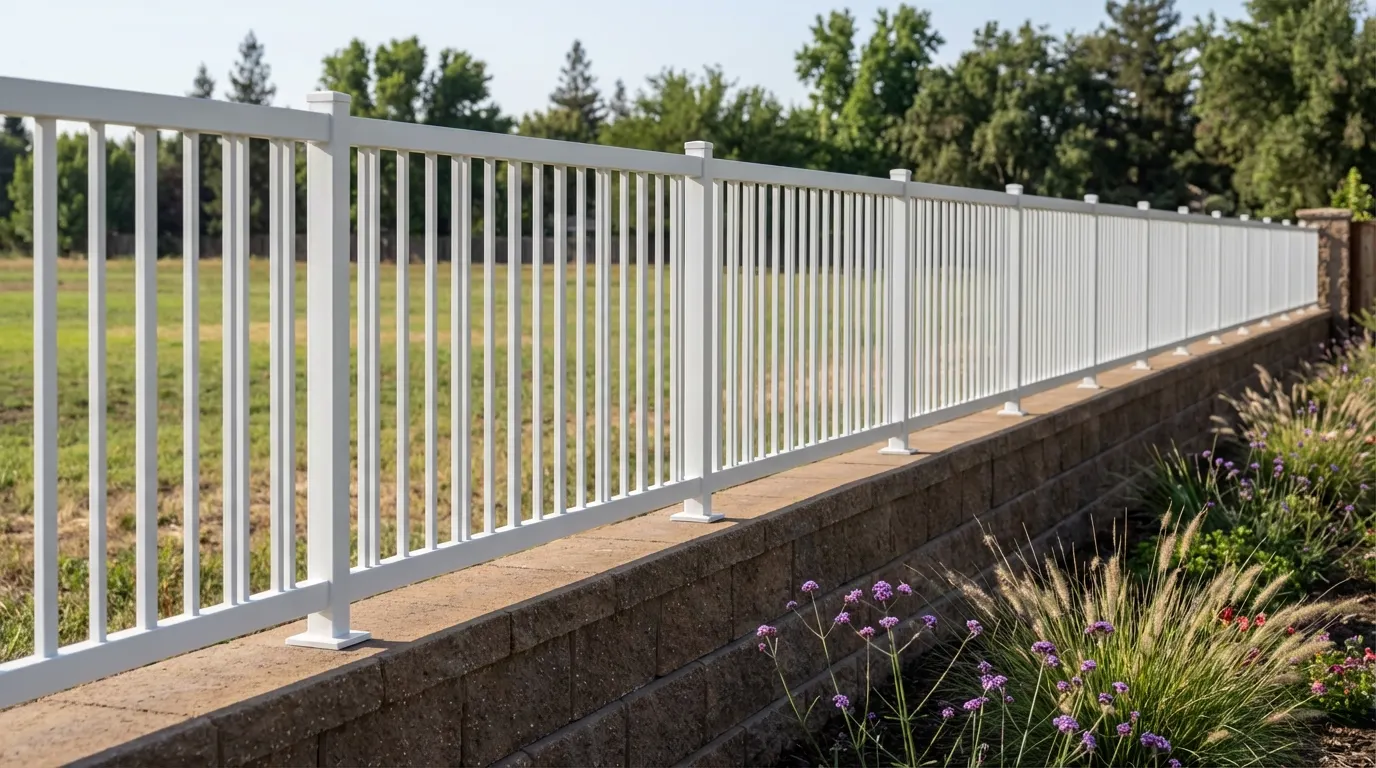
Wind Proof Fence Design Guide: Strong Fence Ideas for Windy Areas
High winds in Southern California are a serious threat to residential property. Standard backyard fences often fail during Santa Ana
Wind Proof Fence Design Guide: Strong Fence Ideas for Windy Areas
High winds in Southern California are a serious threat to residential property. Standard backyard fences often fail during Santa Ana
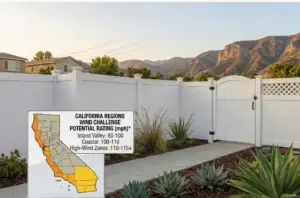
Vinyl Fence Wind Rating: Comparison by Areas in California
California is famous for its sunshine, but homeowners know the wind is a different story. Whether it’s the powerful Santa

Calcoast Fencing Named “Best of 2026” Fence Contractor in Sylmar California
We are incredibly proud to announce that Calcoast Fencing Company has been awarded the Best of 2026 Award by BusinessRate!
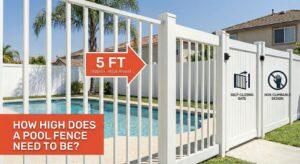
Why Vinyl & Aluminum are the Best Choice for Pool Fencing
Choosing the right fence for your pool isn’t just about aesthetics. It’s about creating a secure perimeter that looks stunning
Choosing the Perfect Vinyl Fence Style: From Scalloped Pickets to Privacy Panels
Adding a fence to your property is about more than just setting boundaries; it’s about defining your home’s character. As

Our First Achievement Of 2026 – Calcoast Fencing
Calcoast Fencing Company is honored to receive the Best of Houzz 2026 award. Trust Los

Thinking about installing a new fence? It’s more than just picking the right wood or vinyl; it’s about navigating the shared space between you and your neighbors.
In this blog post, we’ll cover everything you need to know about property lines, legal responsibilities, and how to keep the peace while upgrading your home’s perimeter.
A fence does more than mark a boundary; it’s a shared structure that affects your neighbor’s view, property value, and even their drainage.
In California, the law views a fence on the property line as a shared asset. This means jumping into a project without a conversation is a recipe for a legal problem.
Most laws on fencing between neighbours emphasize cooperation because, technically, you are both owners of that boundary. Beyond the legalities, think about the aesthetics. If you choose a 7-foot dark charcoal composite fence and your neighbor has a traditional cottage garden, that sudden “wall” might feel intrusive.
Taking the time to discuss styles, heights, and costs upfront prevents future disputes. Remember, a fence is supposed to provide security and privacy, not create a lifelong feud. Even if you are paying for the whole thing yourself, a simple “Hey, I’m thinking of upgrading the fence next month” goes a long way in maintaining neighborhood harmony.
Never guess where your property ends. One of the most common issues homeowners face is a neighbor connected to the fence without permission or building a structure that accidentally inches onto the next lot.
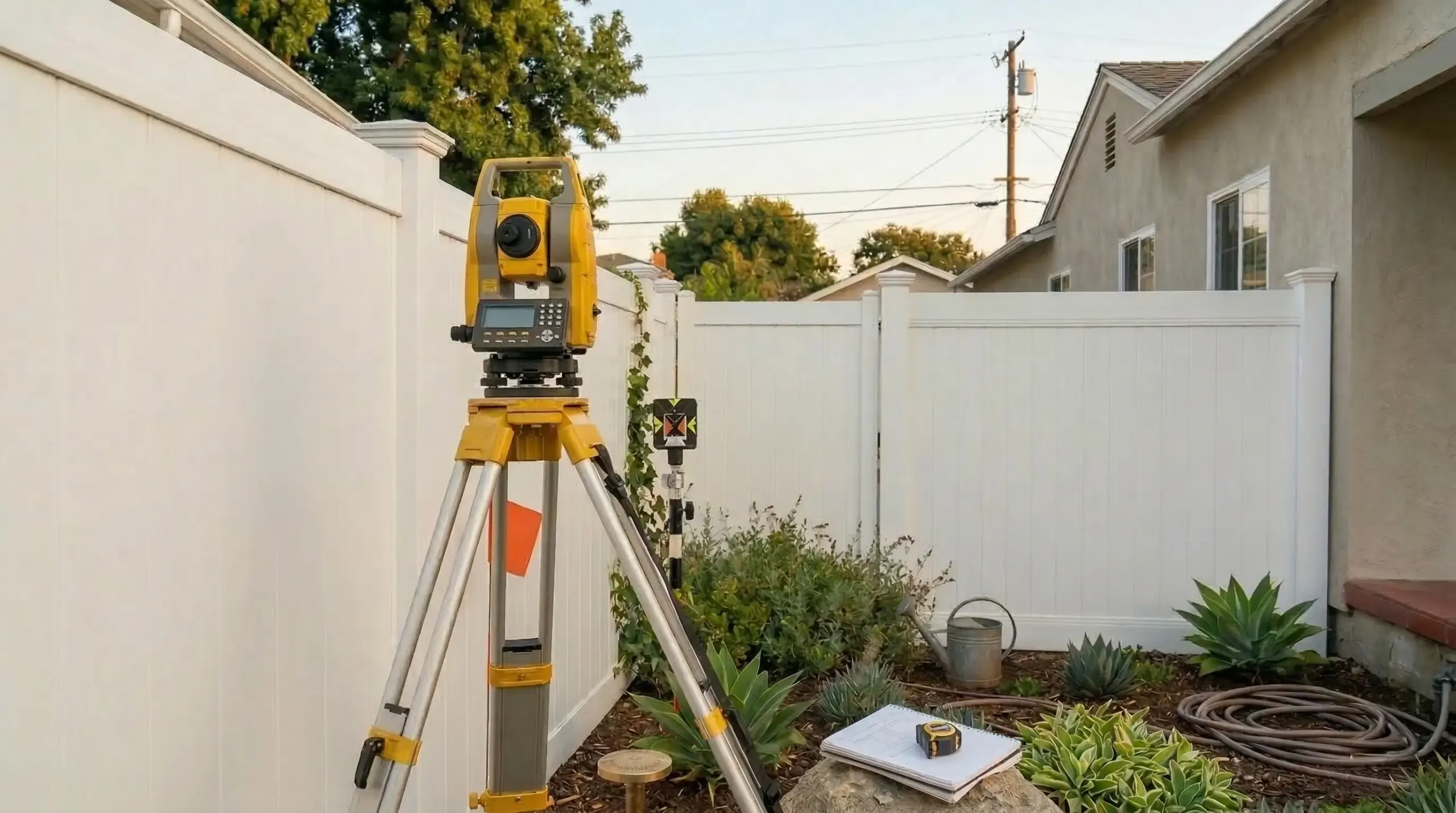
Before the first post hole is dug, you need to find your property pins. These are metal stakes buried at the corners of your lot. If you can’t find them, hire a professional land surveyor.
Knowing exactly where the line sits is essential for sharing a fence with neighbor agreements. If you build the fence even two inches inside your own property line, you legally own the fence, but you might also be creating a “dead zone” that you can’t easily maintain. On the flip side, building it directly on the line makes it a “Good Neighbor Fence” under California law, meaning both parties share the rights and the upkeep.
Every city has its own shared fence rules. If you are looking for laws on fencing between neighbours Los Angeles specifically, you’ll find strict limits on height: usually 6 feet for backyards and 3.5 feet for front yards. Anything taller often requires a special permit or a variance from the city.
The cornerstone of these rules is California Civil Code 841 (The Good Neighbor Fence Act). This law states that neighbors are presumed to gain an equal benefit from the fence dividing their properties. Therefore, they are equally responsible for the reasonable costs of construction, maintenance, and repair.
However, you can’t just build a luxury mahogany fence and send your neighbor a surprise bill for $5,000. The law requires you to give a 30-day written notice before you start spending money. This notice must include:
If your neighbor refuses to pay despite the fence being a necessity, this written notice is your primary evidence if you ever need to take the matter to small claims court.
Even if the state and city say “go,” your Homeowners Association (HOA) might say “no.” HOAs are notorious for having very specific requirements. They might dictate that you can only use “Natural Cedar” or that your fence cannot be a “solid” privacy style but must be “open-slat” to allow air circulation.
Another technical detail often overlooked is the gap between neighbors’ fences. Sometimes, if you and your neighbor can’t agree, you might be tempted to build your own fence right next to theirs. This is known as double fencing with neighbors.
While it’s a way to avoid a shared agreement, it’s usually a bad idea. A 4-inch gap between two fences becomes a trap for leaves, trash, and moisture. Most contractors will advise against this because you literally cannot upkeep the outward-facing side of your new fence once it’s up.
The biggest mistake is connecting the fence to neighbors without asking. People often assume that because a neighbor’s fence is there, they can just “tie into” it. But that neighbor’s fence might not be built to handle the extra weight or tension of your new line. If their post leans or cracks because you attached your gate to it, you are liable for the damage.
Then there is the “Spite Fence.” In California, a fence over 10 feet tall that is built just to annoy or block a neighbor’s light can be declared a private nuisance. Even if you think you’re within your rights, if the intent is clearly malicious, a judge can order its removal.
Lastly, don’t forget the “Pretty Side” rule. Standard etiquette (and many local codes) dictates that the finished side of the fence faces the neighbor or the street, leaving the structural posts and rails on your side. If you put the “ugly” side out, don’t be surprised if your neighbor complains to the city.
FAQ
How close to the property line can I build a fence in California?
In most residential areas, you can build right up to the property line. However, specific “setback” rules may apply for front yards or corner lots to ensure traffic visibility. Always verify with your local building department.
Can a neighbor attach his fence to mine?
No, not without your express permission. Even if the fence is on the property line, it is a shared structure, and any modifications, like nailing boards or hanging heavy equipment, should be agreed upon by both owners.
Who pays for fences between neighbors in California?
Under the Good Neighbor Fence Act, costs are typically split 50/50. However, this applies to “reasonable” costs. If you want an expensive, decorative stone wall and your neighbor only wants a simple chain link, you may have to cover the price difference yourself.
Can I remove the neighbor’s fence on my property in California?
If a survey proves the fence is encroaching on your land, you have the right to have it moved. However, “self-help” is risky. It’s better to provide the survey results to the neighbor and ask them to move it, or seek a court order if they refuse.
Can a neighbor tear down a shared fence?
Absolutely not. Since a boundary fence is a shared property, one neighbor cannot unilaterally destroy or remove it without the other’s consent. Doing so could make them liable for the full cost of a replacement fence and additional damages.