Blog


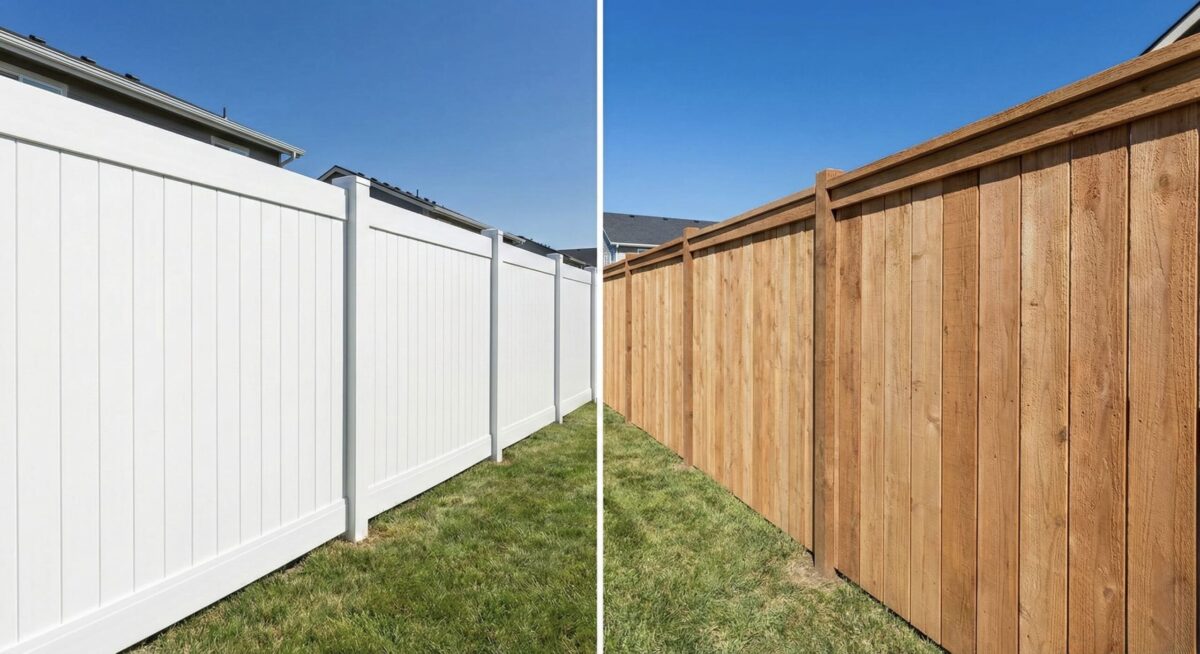
Choosing the right fence is one of the biggest decisions you’ll make for your home’s exterior. It’s not just about marking your property line; it’s about balancing privacy, style, and overall feel.
When it comes to the vinyl fence vs wood fence durability debate, most homeowners find themselves torn between the classic, natural appeal of wood and the long-lasting, rugged strength of vinyl
In this guide, we’re going to break down everything you need to know about the vinyl vs. wood debate. From long-term costs to how they handle the California sun, we’ll help you decide which material is the best for your yard.
What Homeowners Should Know Before Choosing a Fence
Choosing between wood and vinyl isn’t just about the price tag today. Before you decide on a material, you have to look at the big picture.
Everything starts with a specific purpose. For instance, if you need a full privacy fence to block out the view, vinyl’s interlocking panels are often superior. Even if you prefer a decorative picket fence, you have to weigh that visual goal against the fact that the maintenance levels for these materials will be worlds apart.
You also have to consider the “lifetime cost” versus the upfront price. While wood is often cheaper initially, it is a “living” material that requires constant staining and is prone to rot. Vinyl, by contrast, is a long-term investment. You might pay more on day one, but it requires zero maintenance, which actually saves you significant money and time over its lifespan. This is especially true when you consider structural integrity; LA’s weather can be tough on outdoor structures.
Finally, finding the right partner is just as important as picking the material. You should look for a fencing partner who provides professional installation and, more importantly, a solid warranty. Your partner should handle all the complex parts of the job, like city permits and precise measurements, while ensuring the final look achieves aesthetic harmony.
- Every installation we perform comes with a Lifetime Warranty, ensuring your family’s privacy and property value are protected for the long haul.
Maintenance Needs: Vinyl vs Wood Fencing
If you love spending your Saturdays with sandpaper and a paintbrush, wood is the fence for you. To keep it looking decent, you’ll need to stain, paint and repair it every 2 to 3 years.
Vinyl fencing is the complete opposite, often called “set it and forget it” fencing. You never have to paint it, and the most maintenance you’ll ever need to do is spraying it down with a garden hose once or twice a year to wash off the dust.
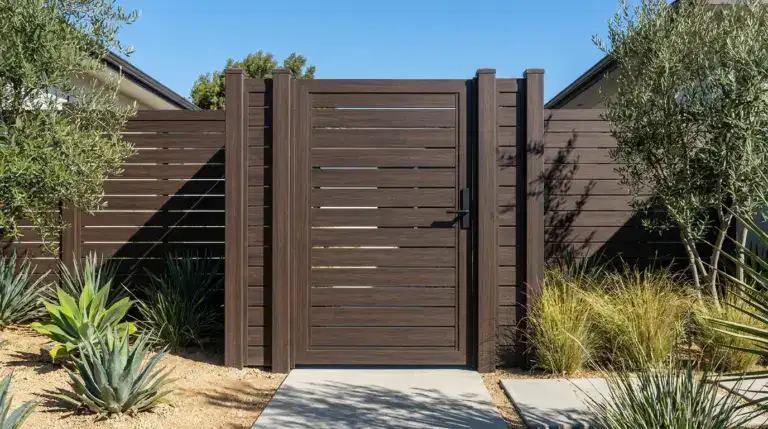
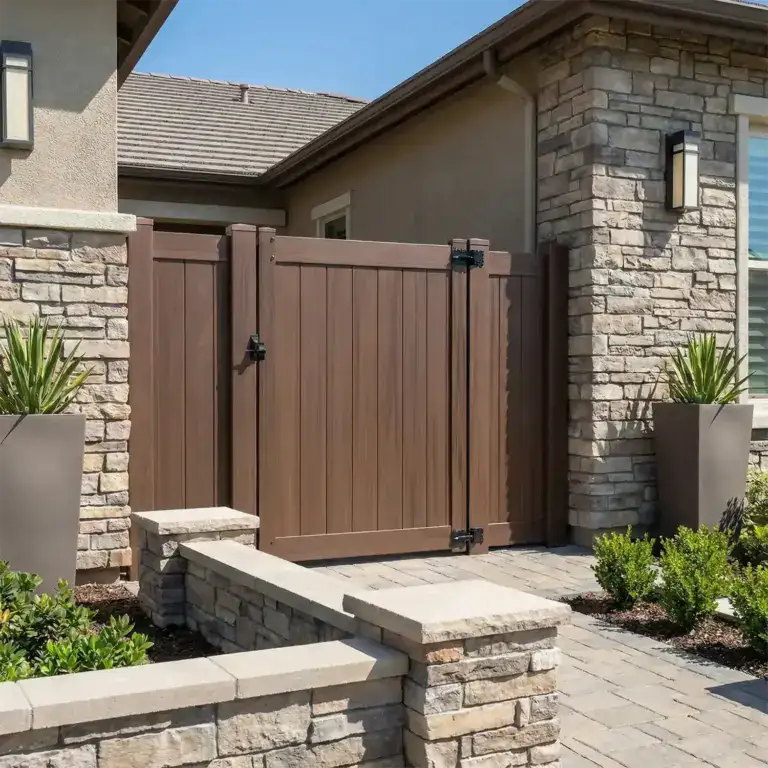
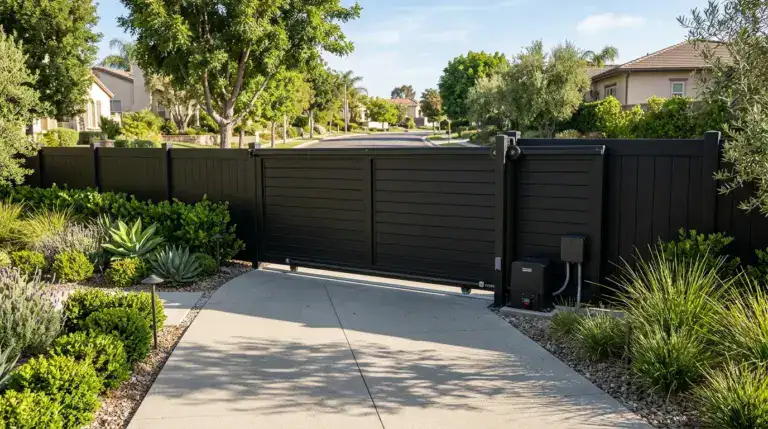
The best part about modern vinyl is that you no longer have to sacrifice that warm, organic look. Many homeowners crave the rustic feel of wood but don’t have the time for the upkeep. That’s where premium vinyl options like Arctic Blend, Dark Walnut, and Dark Sequoia come into play. They offer realistic wood-grain textures that mimic the deep tones of natural wood. You get the high-end look of a stained wood fence with all the durability of vinyl.
Vinyl Vs Wood Fence Installation
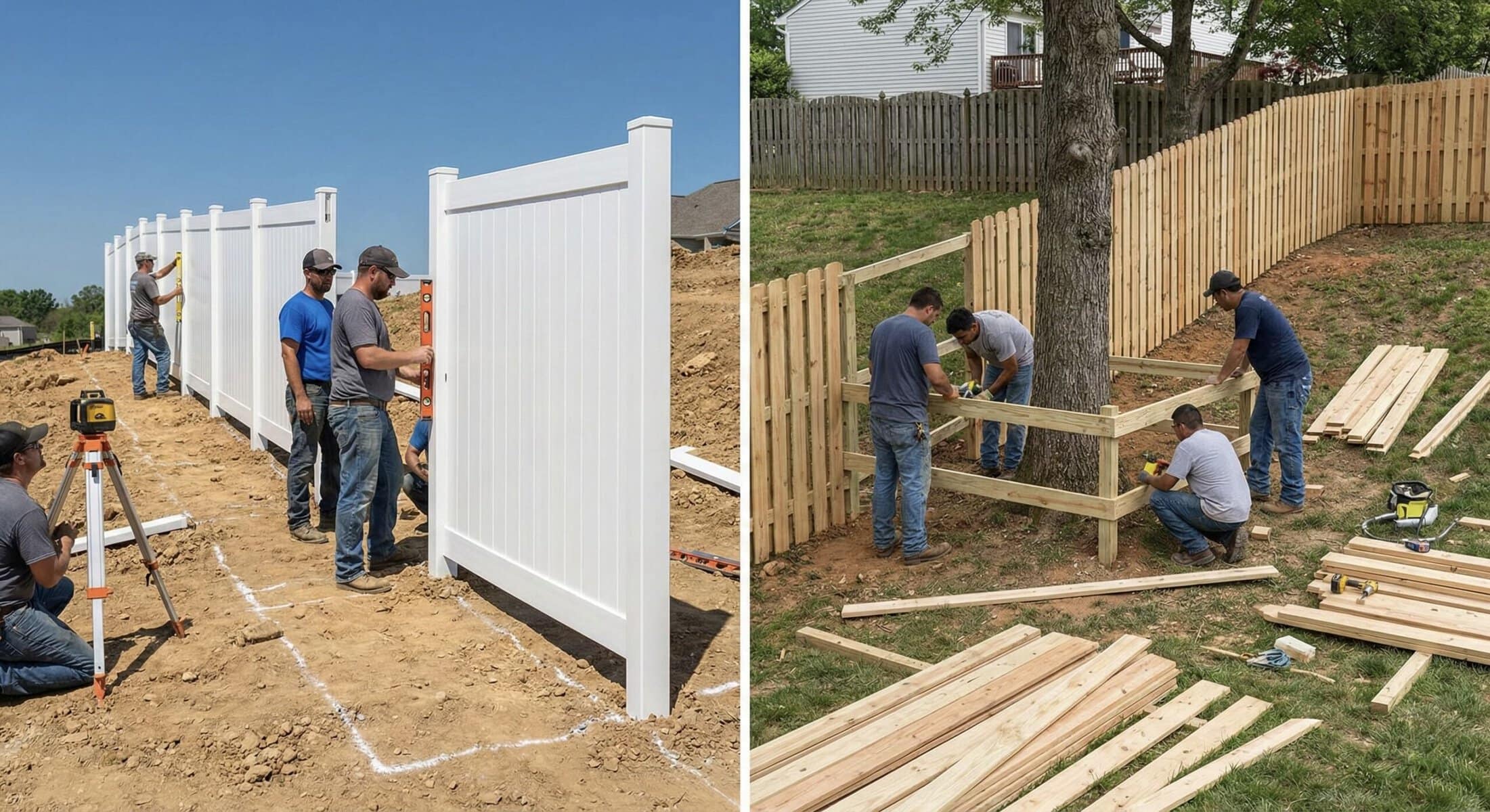
Installing a fence is a precision job that requires much more than just digging holes. Wood is generally more forgiving during the process because it is cut on-site, allowing an installer to adjust for uneven ground or slight slope variations in real-time. However, because wood is heavy and requires individual pickets and rails, the labor is much more time-consuming and prone to human error.
Vinyl installation, on the other hand, is faster once the groundwork is laid, but it demands expert-level precision from start to finish. We often say that the “health” and lifespan of your vinyl fence depend entirely on the quality of the initial install. Because the panels are pre-fabricated to lock together, the post alignment must be perfect. There is no room for error.
This is why professional installation is absolutely critical. A reliable partner ensures that the posts are set at the correct depth and stabilized with the right techniques to prevent shifting or leaning as the ground settles. This is especially vital when your property isn’t perfectly flat or straight.
How Vinyl and Wood Fences Age Over Time
Time is the ultimate test. A wood fence starts beautifully, but the aging process begins almost immediately. Within a few years, you might notice boards leaning or gaps opening up as the wood shrinks. In the LA heat and wind, wood can lose its moisture, leading to splinters and a weathered look. Generally, a wood fence lasts about 5 to 10 years before major repairs are needed.
Vinyl is engineered to defy the typical aging process. It’s a non-porous material, so it doesn’t rot or attract insects. It’s also treated with UV inhibitors to prevent it from becoming brittle. Most premium vinyl fences easily last 20 to 30 years and often longer. And this with almost zero maintenance and zero change in their appearance.
Final Comparison: Wood vs Vinyl fence
Deciding between wood and vinyl ultimately comes down to your personal priorities. While both materials serve the same basic purpose, the way they age and the amount of work they require from you are significantly different.
To help you see the big picture at a glance, we’ve put together a side-by-side wood vs vinyl fence pros and cons.
| Feature | Vinyl Fencing | Wood Fencing |
| Upfront Price | Higher initial investment | Lower initial cost |
| Installation | Requires professional consultation and installation for precision | Can be DIY-friendly but labor-intensive |
| Maintenance | No need for regular repairs, staining or painting for years to come | Needs to be painted, and repaired every 3 years at most |
| Lifespan | 20–30+ years with minimal care | Maximum 5–10 years, even with the utmost care |
| Warranty | Lifetime warranty | Lifetime warranty |
| Durability | Extremely high; rot & pest proof | Prone to decay, mold, and rot |
| Resistance | Withstand wind, rain and sun | Vulnerable to heat, wind and moisture |
| Custom Design | High-end wood-grain textures | Very easy to paint & modify |
Frequently Asked Questions
Which lasts longer: wood fence or vinyl fence?
Vinyl is the winner for longevity, typically lasting 20 to 30 years or more. Wood fence panels require replacement or major repair after 5 to 10 years.
Can I install a wood or vinyl fence by myself?
Professional installation is highly recommended for vinyl due to the need for perfect alignment and setup.
How do wood and vinyl fences affect home value?
Both add value, but a premium vinyl fence often offers a higher return on investment because modern buyers prioritize “maintenance-free” features and long-term warranties.
Is vinyl fencing cheaper than wood?
Wood is cheaper to install today, but if you compare the vinyl fence vs wood fence cost over the years, vinyl wins. There’s no need for the constant expense of painting it, staining it, and having to replace the panels.
Phone: +1 888-735-8833
Email: info@calcoast.us
Related Services