Blog





The Rising Stakes of California Wildfires
For a long time, Southern California homeowners thought of wildfires as a “faraway” problem. But things have changed. Today, wildfires are moving into our suburban streets and urban neighborhoods. Whether you live in Los Angeles, Ventura, or Orange County, fire safety is now a part of daily life.
CAL FIRE is moving fast to protect our communities. In the 2024/2025 fiscal year alone, they performed over 326,000 Defensible Space Inspections. They also finished nearly 1,000 fuel reduction projects across thousands of acres. What does this mean for you? It means state inspectors are active, and they are looking at how prepared your property really is.
Building “Defensible Space” isn’t just a suggestion anymore. It’s a legal requirement. More importantly, the materials you use for your home, especially your fencing, can determine if your house stands or falls during a fire.
What is Defensible Space?
Think of Defensible Space as a protective buffer between your home and the fire. It is a carefully managed area designed to slow a wildfire down before it reaches your front door. This space does 2 critical things: it stops the direct spread of flames and gives firefighters a safe spot to stand and defend your property.
Many people think they are immune to fire risks because they live in a traditional suburb. This is a dangerous misconception. Modern wildfires use wind to “throw” embers miles ahead of the actual fire line.
Because of this, CAL FIRE is no longer just looking at rural cabins. They are inspecting homes in residential tracts across Southern California. You can see the scale of this effort yourself on the CAL FIRE Inspections by County Dashboard. Whether you are in Los Angeles, Ventura, or San Diego, you can check exactly how many of your neighbors have already been inspected. If your property isn’t compliant yet, now is the time to act.
Decoding the 3 Zones: The New Rules Under AB 3074
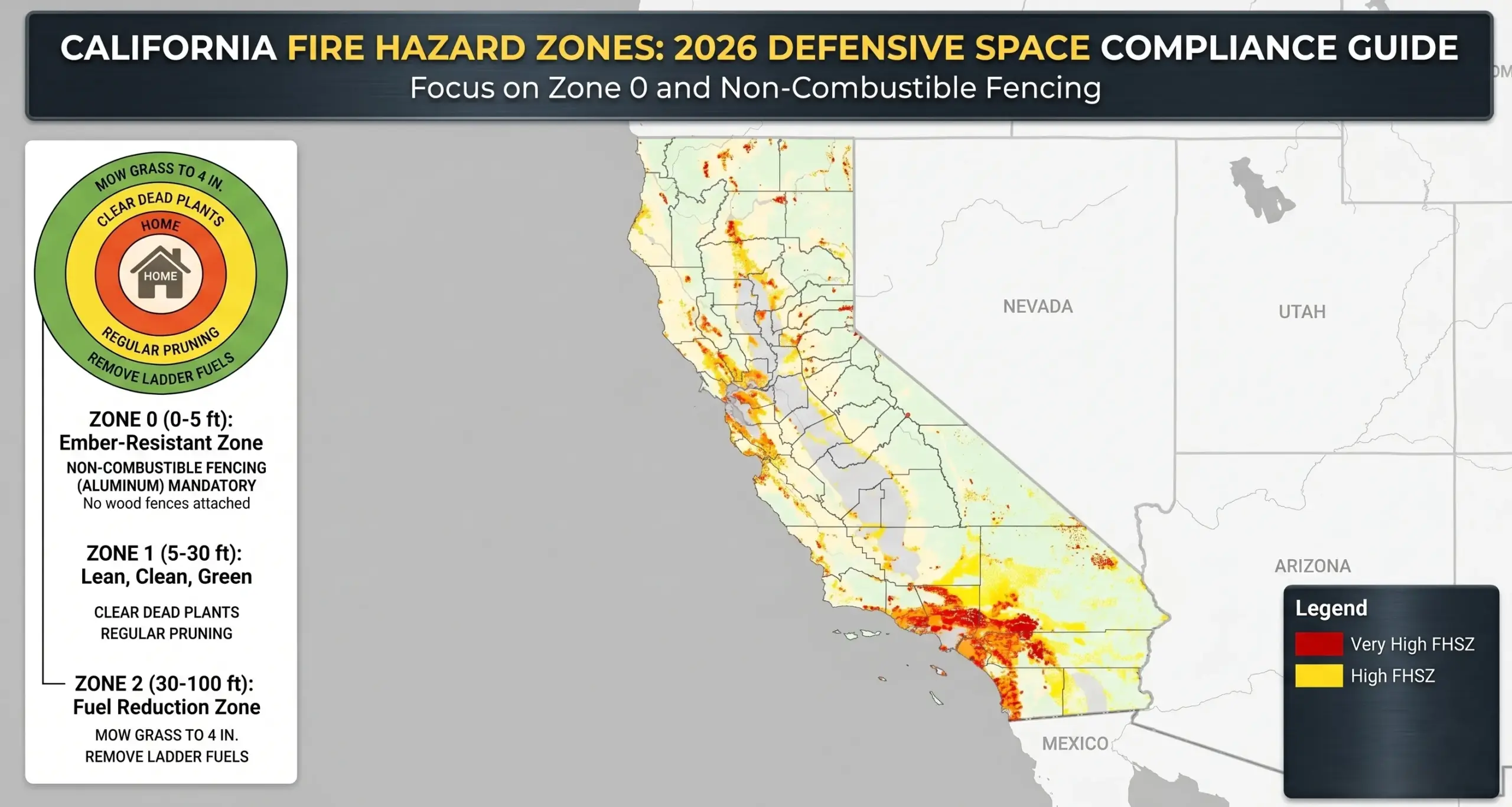
California law is very specific about how you should manage the land around your home. To make it easier for homeowners, CAL FIRE and the state have broken defensible space into three distinct zones. Each zone has a different purpose, but they all work together to keep flames away from your structure.
Here is the breakdown of the current standards as we head into 2026:
Zone 2 (30–100 feet): The Fuel Reduction Zone
This is your outer perimeter. The goal here is to keep the fire on the ground and moving slowly. You must mow your annual grass to a maximum height of 4 inches. It is also vital to create horizontal and vertical space between your shrubs and trees to prevent “ladder fires” from climbing into the canopy.
Zone 1 (5–30 feet): The “Lean, Clean, and Green” Zone
This area is all about removing the fuel that feeds a fire. You need to clear out all dead plants, dry grass, and weeds. Regularly removing fallen leaves and pine needles is a must here.
Zone 0 (0–5 feet) – The Ember-Resistant Zone
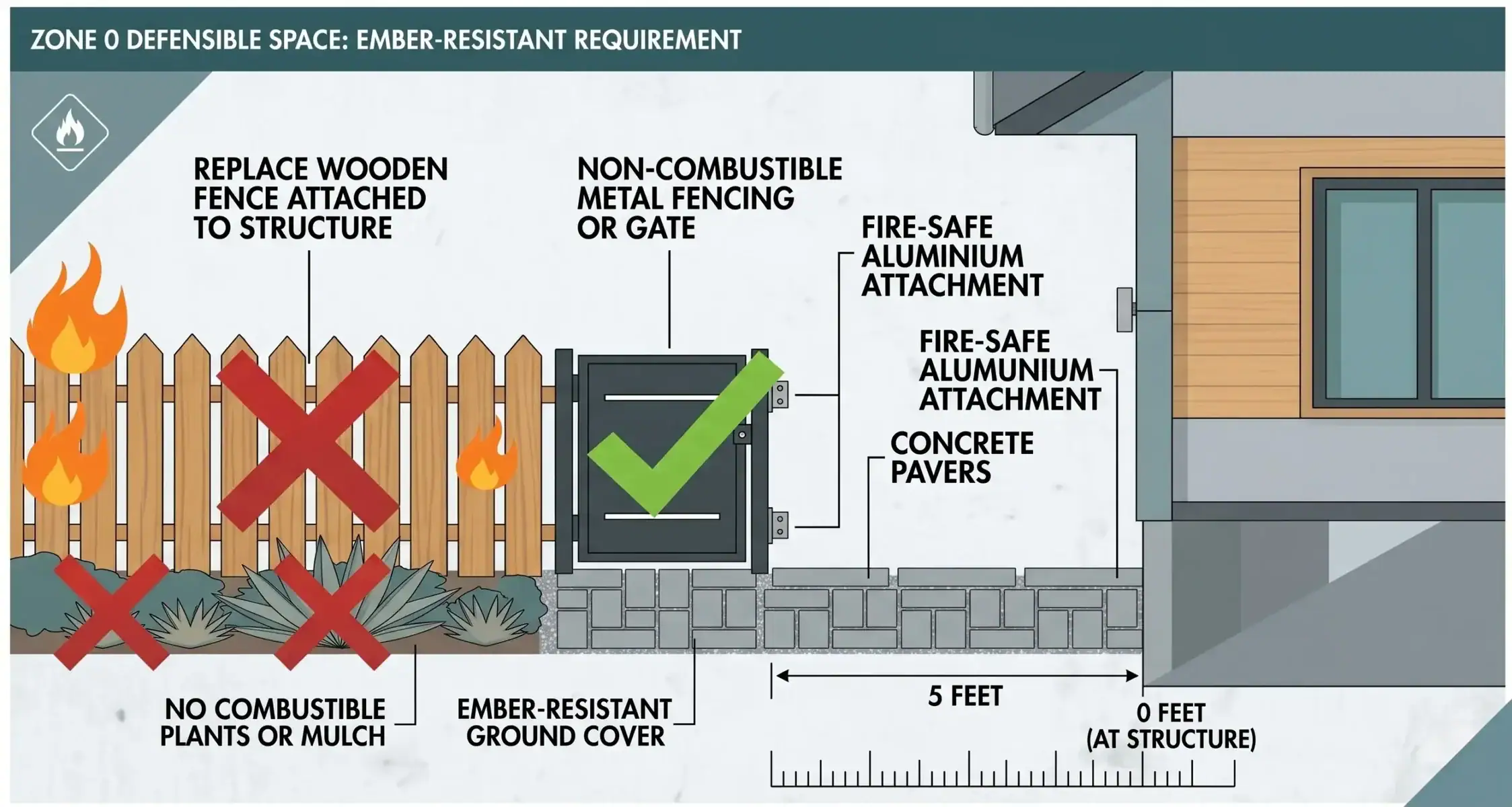
This is where the biggest changes are happening. Under California Assembly Bill 3074 (AB 3074) and Public Resources Code §4291, the first 5 feet directly around your home is now classified as the “Ember-Resistant Zone.
Why does this matter? Because research shows that wind-driven embers are responsible for the majority of home ignitions. These embers land in the “Zone 0” area and quickly ignite whatever they touch.
The state guidelines are now incredibly strict for this 5-foot buffer. The rule is clear: you must replace combustible fencing and gates attached to your home with non-combustible alternatives. If you have a wooden fence that touches your house, it acts like a direct fuse, leading a fire straight to your walls. To be compliant, that section of the fence must be replaced with fire-safe materials.
The Fencing Fire Hazard: Why Wood is a Massive Liability
When a wildfire approaches, it isn’t always the big wall of flames that destroys a home. In most cases, it is the embers. If you have a wood fence attached to your structure, you are essentially providing the fire with a fuse. A wood fence, even if it is treated, will catch fire and carry those flames directly into your home’s eaves and attic.
It is also important to understand material failures. While wood is a clear fire hazard, standard vinyl also has its limits. High-quality vinyl is excellent for property perimeters, but under the extreme heat of a nearby fire, standard vinyl can melt and fail according to ASTM E5768 standards. Because of this, standard vinyl fences are not compliant for Zone 0. To protect the 5-foot buffer around your home, you need materials that won’t ignite or melt when the heat is on.
How Fencing Impacts Your Homeowner’s Policy
If you live in Southern California, you’ve likely heard the stories or experienced it yourself. Insurance companies are actively dropping coverage for thousands of homes or skyrocketing premiums based on wildfire risk. Your fence is no longer just a boundary; it is a key factor in your home’s “risk profile.”
Insurance providers are now using sophisticated data to decide who to cover. One of the primary tools they use is the Fire Hazard Severity Zone (FHSZ) Viewer. We highly recommend you visit the viewer and type in your address. If your home is located in a “High” or “Very High” Fire Hazard Severity Zone, you need to act.
In 2026, having a clear yard isn’t enough. Upgrading to ember-resistant fencing in Zone 0 is becoming a mandatory step to keep many insurance policies active. In fact, new California laws (like SB 1076) are pushing for a future where homeowners who meet these strict “home hardening” and defensible space standards are guaranteed insurance renewals.
Calcoast’s Fire-Safe Solutions: The Right Fence for the Right Zone
At Calcoast Fencing, we don’t believe in a “one-size-fits-all” approach to fire safety. Different areas of your property require different levels of protection. That is why we have engineered our product line to align perfectly with California’s legal defensible space requirements.
For Zone 0 (Attached to the House): Premium Aluminum Fencing & Gates
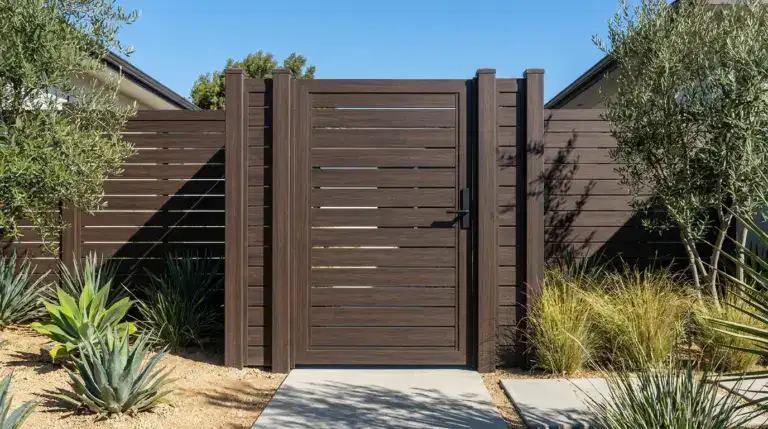
If your fence or gate touches your home or sits within that critical 5-foot buffer, aluminum is the gold standard. Our Premium Aluminum Fencing meets the strictest Class A fire standards.
Unlike wood, it will not ignite. Unlike standard vinyl, it will not melt under the intense heat of wind-blown embers. Aluminum is 100% non-combustible and complies entirely with AB 3074 regulations.
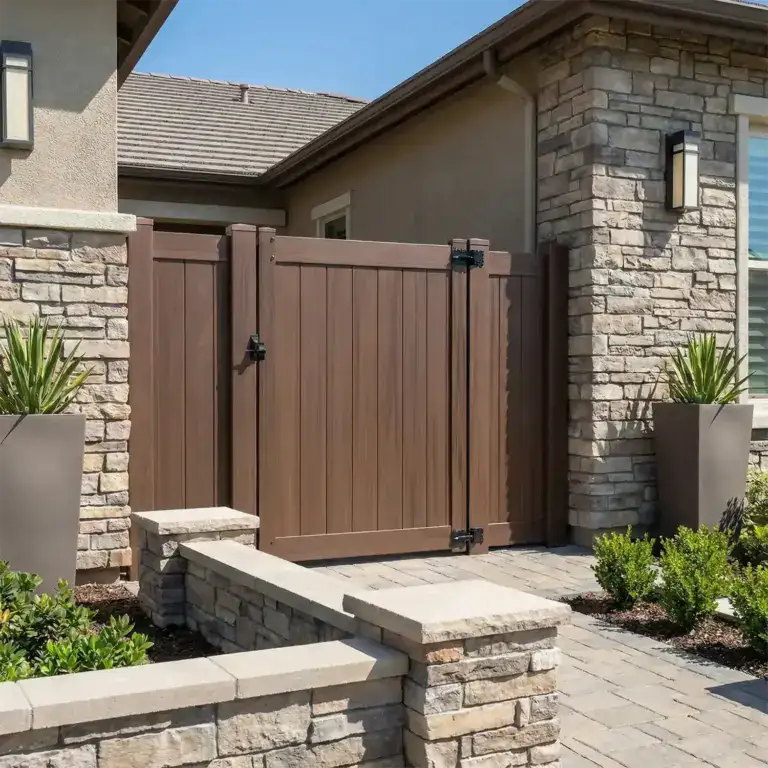
For Zone 1 & 2 (Property Perimeters): Premium Vinyl Fencing
Once you move past the 5-foot “Ember-Resistant Zone,” you have more flexibility. For boundary fences and property perimeters where Zone 0 rules do not apply, our Premium Vinyl Fencing remains a superior choice over traditional wood.
Why? Our vinyl fencing is moisture-resistant and durable. It won’t decay or become a fire-feeding hazard over time. For the areas further away from your structure, vinyl offers the perfect balance of privacy, longevity, and safety that wood simply cannot match.
Take the Defensible Space Self-Assessment
You don’t have to wait for a state official to knock on your door. In fact, by the time an inspector shows up, you might already be facing deadlines or potential fines. The best way to protect your home is to be proactive.
CAL FIRE has made this process incredibly easy with their official Self-Assessment Tool (powered by Survey123). You can take your smartphone, walk your property, and check your own compliance in about five minutes.
This interactive tool walks you through the same checklist the professionals use. It will help you identify if your wood gates are too close to the house or if your perimeter fencing needs an upgrade. Taking this five-minute “test” today can save you from a major headache and a major safety risk tomorrow.
Protect Your Home Before the Deadline
The clock is ticking for homeowners across the Golden State. With the deadline for full state compliance approaching, counties throughout Los Angeles and Southern California are actively cracking down on defensible space violations. Waiting until a wildfire is on the horizon is too late. The most effective way to safeguard your property is to start from the perimeter and work your way in.
By upgrading your fencing today, you are doing more than just meeting a legal requirement. You are investing in peace of mind. At Calcoast Fencing, we stand behind the quality and safety of our products. Every installation we perform comes with a Lifetime Warranty, ensuring your family’s privacy and property value are protected for the long haul.
Don’t let an outdated wood fence become the weak link in your home’s defense. Contact Calcoast Fencing today for a professional consultation, and let’s make sure your home is ready for whatever the next fire season brings.
- Phone: +1 888-735-8833
- Email: info@calcoast.us